
A fishing tournament director is the key figure responsible for organizing, managing, and enforcing all tournament activities to maintain fair play and smooth competition. Without a skilled director at the helm, even the most exciting bass fishing event can fall apart through poor logistics, inconsistent rule enforcement, or a failure to respond to changing conditions on the water. The role of tournament director in fishing goes far beyond showing up at the boat ramp. It covers everything from venue selection and scheduling to real-time risk management and angler communications. Tools like Reel Time Apps and Tournament Bass Fishing Software have modernized how directors handle these responsibilities, while real-world events like the 2026 Fresno Challenge cancellation show just how much weight this position carries.
What are the primary responsibilities of a tournament director in fishing events?
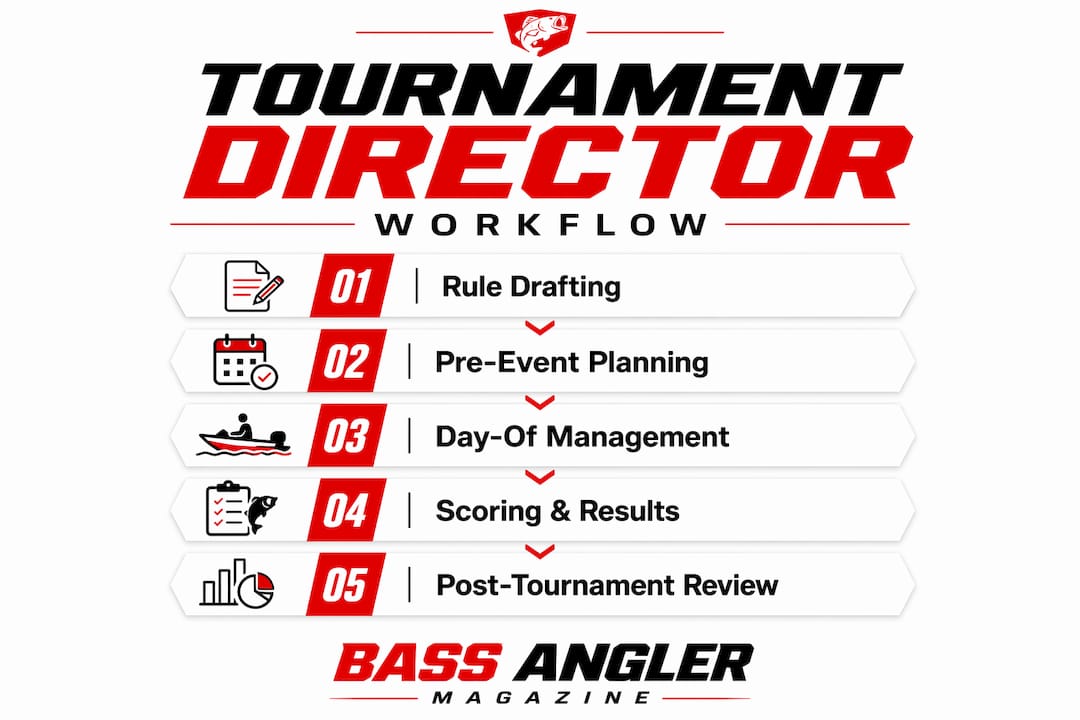
The tournament director role covers a wide range of duties that begin months before the first angler ever launches a boat. Scheduling is the foundation. Directors must select venues, set dates, and build contingency plans for weather, water conditions, and permit issues. A poorly chosen venue or a schedule that conflicts with local fishing regulations can derail an entire season before it starts.
Rule creation and enforcement sit at the core of fishing tournament management. Directors write the rulebook, communicate it clearly to all participants, and apply it consistently on tournament day. This includes everything from defining legal catch limits and size requirements to specifying which areas of the lake are off-limits. Clear announcements about rules and off-limits areas prevent confusion and disputes that can damage an event’s reputation.
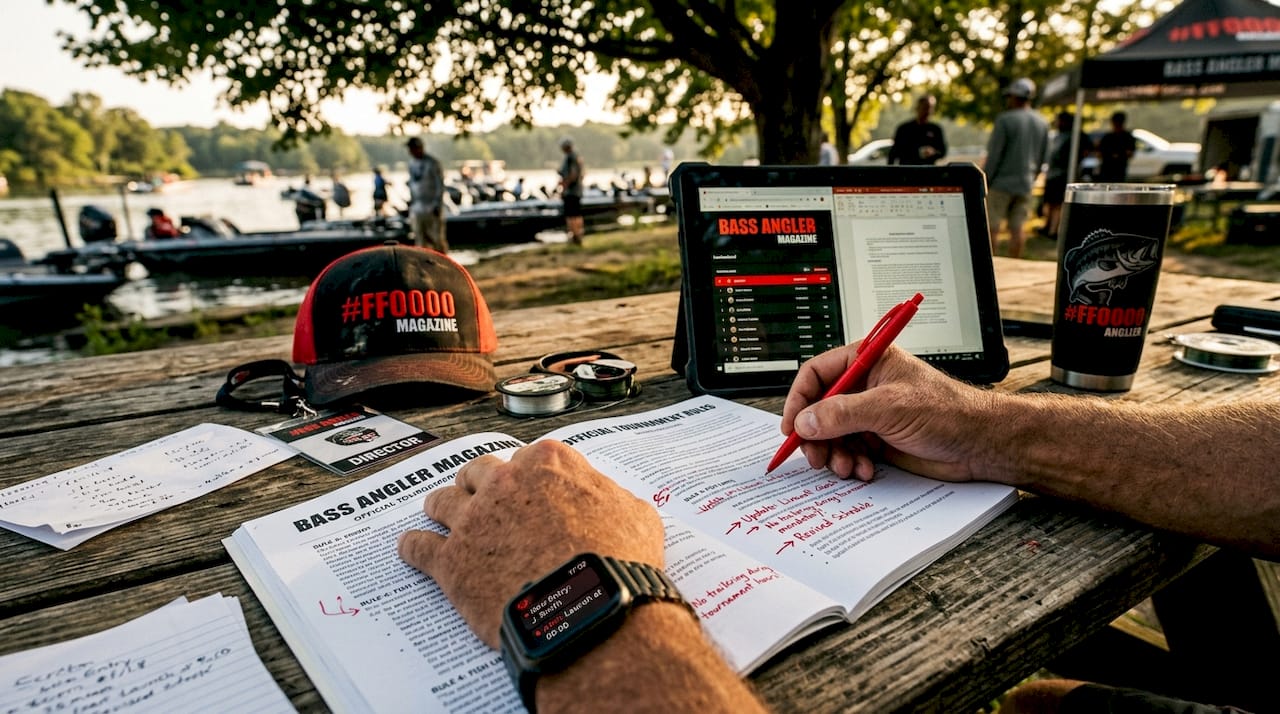
Logistics management is where the director’s organizational skills get tested most visibly. Check-ins, boat inspections, weigh-ins, and scoring all require precise coordination. A director who runs a smooth weigh-in creates a positive experience for competitors and spectators alike. One who lets lines back up or scoring errors slip through loses the trust of the field fast.
Here is a breakdown of the core tournament director duties that define the position:
- Venue selection and permitting: Securing access to quality water and obtaining all necessary permits well in advance
- Rule drafting and distribution: Writing clear, fair rules and getting them into anglers’ hands before the event
- Check-in and launch management: Organizing morning check-ins, boat inspections, and safe launch procedures
- Weigh-in coordination: Running an accurate, efficient weigh-in with certified scales and proper fish care protocols
- Scoring and results reporting: Calculating standings correctly and posting results in a timely manner
- Angler communication: Sending pre-event briefings, on-water updates, and post-event results to all participants
- Dispute resolution: Handling protests and rule infractions with fairness and consistency
Pro Tip: Draft your rulebook at least 60 days before the event and send it to a small group of experienced anglers for feedback. Catching ambiguous language early prevents disputes on tournament day.
How do tournament directors manage unpredictable factors like weather or water levels?
Risk management is one of the most demanding parts of overseeing fishing tournaments, and it never stops. A director’s job does not end once the schedule is set. Conditions on the water change constantly, and the director must monitor them from the moment a venue is selected through the final weigh-in.
The 2026 Fresno Challenge is a clear example of this responsibility in action. Tournament Director Josh Parrow canceled the event due to rapidly declining water levels that rendered the venue unsafe and unviable. That decision was not easy. Canceling an event disappoints anglers, affects sponsors, and creates logistical headaches. But it was the right call, and it protected both the competitors and the fishery.
“Tournament directors perform ongoing operational risk management, continuously updating their assessments from scheduling through tournament day to maintain safety and viability.” This is not a one-time check. It is a constant process that demands attention and decisiveness.
The steps a director takes when managing unpredictable conditions follow a clear progression:
- Monitor conditions continuously: Track weather forecasts, water levels, and venue access reports in the days and hours leading up to the event.
- Establish decision thresholds in advance: Define specific conditions that will trigger a postponement or cancellation before emotions run high on the day of the event.
- Communicate early and often: Notify anglers as soon as a decision is made, using email, social media, and tournament management apps to reach everyone quickly.
- Document the decision: Record the conditions, the reasoning, and the timeline of the decision to protect the organization and maintain transparency.
- Activate contingency plans: If a backup venue or date exists, move quickly to confirm logistics and update all participants.
The Fresno Challenge cancellation also illustrates how these decisions affect tournament credibility. Anglers who see a director act decisively and communicate clearly come away with more respect for the event, even when they are disappointed. A director who waits too long or communicates poorly damages trust that takes seasons to rebuild.
What tools and technologies do tournament directors use for fishing tournament management?
Technology has changed how directors handle the administrative side of events in a big way. Reel Time Apps has been adopted by tournament directors since 2005 for managing registration, scoring, payouts, and communications. Its live leaderboards and mobile catch submissions give anglers real-time updates and reduce the paperwork burden on the director significantly. That kind of transparency builds excitement and keeps competitors engaged throughout the day.
Tournament Bass Fishing Software takes a different approach, focusing on advanced scheduling, instant standings updates, and roster population. It automates results reporting, which means directors spend less time on manual calculations and more time managing the event itself. For clubs running multi-event trail seasons, this kind of automation is a real advantage.
| Feature | Reel Time Apps | Tournament Bass Fishing Software |
|---|---|---|
| Live leaderboards | Yes | Yes |
| Mobile catch submissions | Yes | No |
| Automated payout calculations | Yes | No |
| Advanced scheduling tools | Limited | Yes |
| Roster and registration management | Yes | Yes |
| Instant standings updates | Yes | Yes |
Both platforms reduce human error in scoring, which is one of the most common sources of post-event disputes. The MLF organization’s SCORETRACKER Live platform unveiled at ICAST 2025 shows where the sport is heading, with real-time data feeds that engage fans and give directors better operational visibility.
Pro Tip: Test your chosen tournament management software with a small club event before deploying it at a larger trail tournament. Working out technical issues with 20 boats is far easier than troubleshooting with 80.
Why is enforcing rules and maintaining fairness so critical for a tournament director?
Rule enforcement is the backbone of competitive integrity in bass fishing. Without consistent application of the rules, the entire premise of fair competition breaks down. Tournament directors enforce rules like no trolling and banning alcohol during competition to preserve both fairness and safety on the water. These are not arbitrary restrictions. They protect every angler in the field equally.
Consistency is what separates a respected director from one who loses the confidence of the field. If a rule is enforced strictly for one angler and overlooked for another, word travels fast in the bass fishing community. Directors must apply the same standard to every competitor, regardless of their standing in the points race or their relationship with the director.
Disputes are inevitable in any competitive environment. A director who handles protests with a clear process and a calm demeanor earns respect even from the angler who loses the ruling. The process matters as much as the outcome. Having a written protest procedure in the rulebook, a defined timeline for decisions, and a panel of officials to consult when needed all contribute to fair outcomes.
One of the most important ethical guidelines for fishing directors is this: directors should not compete in their own events. Occupying both roles creates a real or perceived conflict of interest that undermines the trust of every other competitor. Even if the director is scrupulously fair, the appearance of a conflict is enough to damage the event’s credibility. Keeping those roles separate is a non-negotiable standard in well-run tournaments.
Key enforcement areas every director must address include:
- No trolling rules: Preventing the use of a motor to present a lure, which gives an unfair advantage
- Alcohol prohibition: Banning alcohol consumption during competition hours for safety and liability reasons
- Off-limits enforcement: Ensuring no competitor fishes restricted areas before or during the event
- Live well and fish care standards: Requiring proper aeration and handling to support conservation
- Weigh-in deadline compliance: Applying late penalties consistently and without exception
How do tournament directors impact the growth of bass fishing and the angler experience?
A well-run tournament does more than crown a winner. It creates an experience that brings anglers back season after season and attracts new competitors to the sport. Smooth operations and positive experiences encourage angler retention and community building, which is the foundation of a healthy tournament trail.
Directors who communicate clearly before, during, and after events build a sense of community that extends beyond the water. Pre-event briefings that cover rules, safety protocols, and venue details set competitors up for success. Post-event results posted quickly and accurately keep the conversation going and build anticipation for the next tournament.
Supporting amateur anglers is a specific area where directors make a measurable difference. First-time competitors who receive clear guidance on how to register for a tournament and what to expect on tournament day are far more likely to return. A director who takes time to answer questions and create a welcoming atmosphere grows the sport one angler at a time.
| Director Action | Impact on Anglers and Sport |
|---|---|
| Clear pre-event communication | Reduces confusion, builds confidence in new competitors |
| Consistent rule enforcement | Maintains trust and competitive integrity across the field |
| Smooth weigh-in operations | Creates a positive, memorable experience for competitors and spectators |
| Decisive risk management | Protects angler safety and preserves the fishery |
| Post-event results and recognition | Encourages retention and community engagement |
Key takeaways
The tournament director role in fishing is the single most important factor in whether a bass tournament succeeds or fails for every angler in the field.
| Point | Details |
|---|---|
| Core responsibilities | Directors manage scheduling, logistics, rule enforcement, and angler communication from start to finish. |
| Risk management | Continuous monitoring of conditions, as seen in the 2026 Fresno Challenge, is a non-negotiable director duty. |
| Technology adoption | Platforms like Reel Time Apps and Tournament Bass Fishing Software reduce errors and improve transparency. |
| Fairness and ethics | Directors must enforce rules consistently and never compete in their own events to protect integrity. |
| Sport growth | Well-run events drive angler retention and community building, expanding bass fishing participation over time. |
What I’ve learned watching great tournament directors work
After spending years covering bass fishing events and watching directors operate under pressure, one thing stands out clearly. The best directors are not the ones who never face problems. They are the ones who have already thought through every problem before it happens. They have a written contingency plan, a communication protocol, and a dispute resolution process ready before the first boat hits the water.
The biggest misconception anglers have about the director’s job is that it is mostly administrative. The paperwork is real, but the hardest part is making judgment calls in real time with incomplete information and a field full of competitors watching every move. Josh Parrow’s decision to cancel the Fresno Challenge is a perfect example. That call required reading conditions accurately, acting decisively, and communicating clearly under pressure. Most anglers never see the hours of monitoring and deliberation that go into a decision like that.
For anyone considering stepping into a director role, my honest advice is to shadow an experienced director for at least one full event season before running your own. Watch how they handle the weigh-in line when it backs up, how they respond to a protest, and how they communicate a rule change mid-event. That hands-on learning is worth more than any guidebook.
The reward is real, though. When an event runs smoothly and you see anglers leaving the ramp with big smiles and plans to come back next season, that feeling is hard to match. The fishing community is built on shared passion, and a great director is one of the people who keeps that community strong.
— Mark
Explore more bass fishing and tournament resources at Bassanglermag
Bassanglermag covers the full world of bass fishing, from tournament preparation to on-the-water tactics that help you compete with confidence. Whether you are an angler getting ready for your first trail event or a director looking for insights on running better tournaments, Bass Angler Magazine has the content you need year-round.
Check out Bassanglermag’s coverage of fall bass fishing tips to sharpen your tournament game as the season changes. The BAM Tournament Trail and digital content library are packed with fresh, practical advice for anglers at every level. Visit bassanglermag.com to explore event coverage, technique breakdowns, and the latest news from the bass fishing community we all love.
FAQ
What does a tournament director do in a fishing competition?
A tournament director oversees all aspects of a fishing event, including scheduling, rule enforcement, logistics, scoring, and angler communication. The role requires managing both pre-event planning and real-time decisions on tournament day.
Can a tournament director fish in their own event?
Directors should not compete in events they are running, as this creates a conflict of interest that undermines competitive fairness. Occupying both roles risks real or perceived advantages that damage trust among competitors.
What software do tournament directors use to manage events?
Platforms like Reel Time Apps and Tournament Bass Fishing Software are widely used for registration, live scoring, payout calculations, and scheduling. These tools reduce manual errors and improve transparency for all competitors.
How do directors handle weather or water level issues during tournaments?
Directors monitor conditions continuously and establish cancellation or postponement thresholds in advance. The 2026 Fresno Challenge cancellation by Josh Parrow is a clear example of a director acting decisively when conditions made competition unsafe.
Why is consistent rule enforcement so important in bass fishing tournaments?
Consistent enforcement protects every angler equally and maintains the credibility of the event. Rules covering areas like no trolling and alcohol prohibition exist to preserve both fairness and safety on the water.