
Scent is one of the most underused tools in bass fishing, and understanding its role can directly change how many fish you land. The role of scent in bass fishing is to engage a bass’s olfactory and gustatory senses, especially when visual cues are limited or fish behavior shifts. Bass are primarily sight feeders, but scent fills critical gaps that sight and vibration cannot cover. Field testing confirms that scent matters most in five specific conditions: low visibility, high fishing pressure, cold water, bedding behavior, and bite retention. Knowing when and how to use scent separates anglers who occasionally catch fish from those who consistently put them in the boat.
How does scent affect bass? The sensory biology explained
Bass perceive their environment through four main systems: sight, the lateral line, olfaction, and taste. Sight drives most feeding decisions in clear water, but the other three systems fill in when light or clarity drops. Understanding how scent affects bass starts with knowing how each system contributes to the feeding sequence.
The olfactory system gives bass long-range chemical detection. Water carries dissolved molecules from prey, and bass track those chemical signals upstream toward the source. This is not a fast or precise system, but it works over distance and in total darkness. Bass detect water-soluble amino acids and fish oils that mimic natural prey chemistry, which is why amino acid formulas like L-Alanine and garlic-infused scents outperform generic attractants.
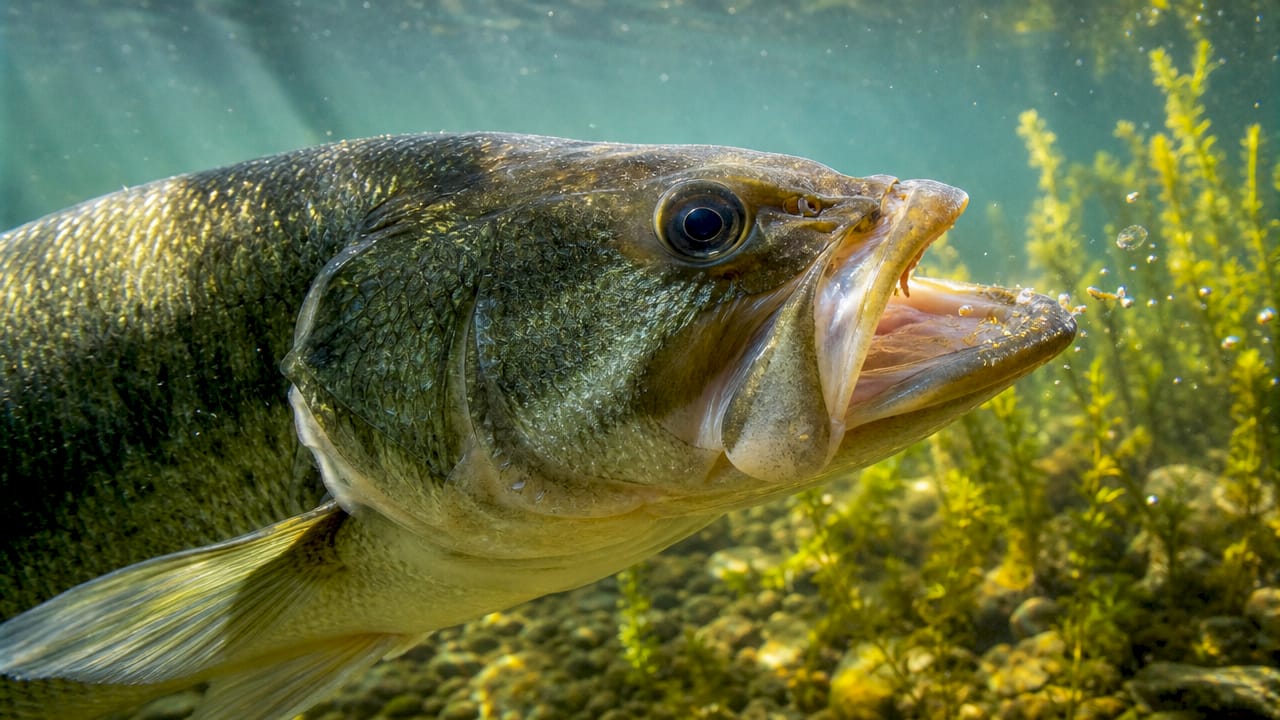
Taste is where the feeding decision gets finalized. Bass have over 10,000 taste buds distributed throughout their mouth, throat, and gills. That number means a bass evaluates your lure the instant it makes contact. If the taste does not match the expected prey profile, the fish spits it fast. Scented lures that carry amino acids and natural salts extend the time a bass holds the bait, giving you a longer window to set the hook.
Human skin is a real problem here. Your skin secretes L-serine, which functions as an alarm scent in aquatic environments. Bass recognize it as a warning signal and pull back. Washing hands with enzymatic soap or applying a masking scent before handling lures neutralizes this repellent and keeps your presentation clean.
| Sensory system | Range | Role in feeding | Scent impact |
|---|---|---|---|
| Sight | Short to medium | Primary strike trigger | Low in clear water |
| Lateral line | Short | Vibration and movement detection | None directly |
| Olfaction | Long | Chemical tracking and attraction | High in murky water |
| Taste | Contact | Final hold or release decision | Critical for bite retention |
Pro Tip: Rinse your hands with lake water after washing them. This removes soap residue and helps your lures carry a neutral, water-matched scent profile.
Five scenarios where scent has the greatest impact
Scent does not improve every fishing situation equally. Its value spikes in specific conditions where bass cannot rely on sight or where their behavior makes them more scent-dependent. Knowing these five scenarios helps you decide when to reach for the scent bottle and when to leave it in the tackle box.
Low visibility or murky water. When water clarity drops below 6 inches, bass cannot track a lure visually from any distance. Strong scent cues like garlic or crawfish attract bass effectively in these conditions by creating a chemical trail they can follow to the source. This is the single most reliable scenario for scent to produce measurable results.
Heavily pressured fisheries. Wary bass that have seen dozens of lures become hesitant to commit. A natural scent profile on a finesse soft bait reduces the fish’s suspicion at the moment of contact and increases the chance it holds the bait long enough for a hookset.
Cold water conditions. Bass metabolism slows significantly in cold water. Slow-moving lures fished deep need every advantage to trigger a strike. Scent gives a stationary or slow presentation a chemical signal that keeps a lethargic bass interested longer than a bare lure would.
Bedding bass. Spawning bass do not always strike out of hunger. They strike defensively to remove threats from the nest. Certain scents, particularly those mimicking crawfish or bluegill, trigger stronger defensive responses and cause bedding fish to pick up and move the lure rather than just nudge it.
Bite retention. This is the most overlooked application. A bass that strikes a scented lure holds it longer before spitting. That extra fraction of a second is often the difference between a solid hookset and a missed fish.
Pro Tip: In murky water, apply scent every 15 minutes and work your lure slowly. The slower retrieve gives the scent trail more time to build and reach the fish before the lure passes through the strike zone.
What types of bass fishing scents work best?
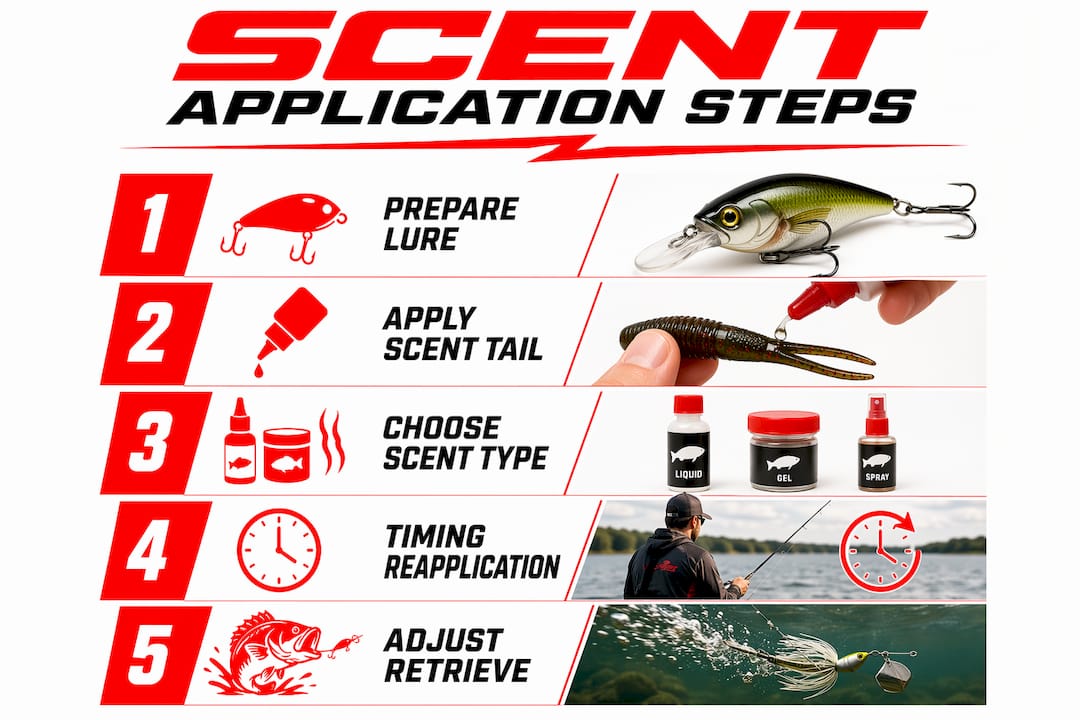
Not all scent products work the same way in water. The chemistry behind how a scent disperses determines whether it creates a useful trail or just coats the lure surface without reaching the fish. Choosing the right formula for your conditions is as important as choosing the right lure.
Water-soluble sprays and gels create true scent trails because their molecules dissolve and travel through the water column. Water-soluble amino acid gels lock in attractant molecules for effective chemical dispersion. The tradeoff is longevity. Water-soluble sprays wash off within 15–20 minutes, so you need to reapply regularly. Gels and pastes adhere to soft plastics longer and maintain a consistent scent profile between casts.
Oil-based scents are the most common product on the market, but they carry a significant limitation. Oil-based formulas are hydrophobic and do not disperse in water. They coat the lure surface and can mask unnatural smells, but they do not create the chemical trail that draws bass from a distance. Use oil-based products as a masking agent, not as a primary attractant.
Natural prey-mimicking formulas with amino acids and salts are the most effective category overall. Products built around L-Alanine, crawfish extract, or shad oil match the chemical signature of actual bass forage. The Berkley Lab Series combines MaxScent, PowerBait, and Rapid Release Slime technology to deliver this kind of multi-layered scent profile directly from the bait itself.
| Scent type | Water dispersal | Longevity | Best use case |
|---|---|---|---|
| Water-soluble spray | High | 15–20 minutes | Creating scent trails in murky water |
| Gel or paste | Medium | 30–60 minutes | Pressured fish, slow presentations |
| Oil-based | Low | Long lasting | Masking human scent on hard baits |
| Amino acid formula | High | Medium | Matching forage chemistry for bite retention |
Best practices for applying scent in bass fishing
Applying scent correctly matters as much as choosing the right formula. Poor application wastes product, reduces effectiveness, and can even spook fish if the wrong scent ends up on your lure.
Reapply on a schedule. Water-soluble sprays wash off within 15–20 minutes. Set a timer or reapply after every third or fourth cast in moving water. Gels and pastes last longer but still need a fresh coat every 30–45 minutes to maintain a strong signal.
Clean your hands before every lure change. Scrubbing your hands removes skin oils and contaminants that repel bass. Human skin secretes L-serine, a natural alarm compound that bass recognize. Use enzymatic soap or a dedicated hand cleaner, then rinse with lake water before touching your lure.
Match the scent to local forage. Bass in a shad-heavy lake respond better to shad or baitfish scents. Bass feeding on crawfish in rocky structure respond to crawfish extract. Check what the fish are eating and match your scent to that food source. Understanding bass forage patterns gives you the foundation to make that call confidently.
Use scent as a complement, not a crutch. Scent works best when your lure presentation is already solid. A poorly worked lure with great scent still catches fewer fish than a well-presented lure with average scent. Think of scent as the final layer of a complete presentation.
Combine scent with sound and visual cues. The sensory matching strategy integrates sound, visual, and scent cues to maximize strike probability from the moment a bass detects the lure to the moment it bites. A rattling crankbait with a crawfish scent gel covers three sensory channels at once and gives bass multiple reasons to commit.
Pro Tip: Apply scent to the tail section of soft plastics rather than the body. Bass typically strike the tail first, so placing scent at the strike point improves both attraction and bite retention.
Key takeaways
Scent improves bass fishing results most when it is matched to conditions, applied correctly, and used alongside strong lure technique.
| Point | Details |
|---|---|
| Bass use taste to decide | Over 10,000 taste buds mean bass evaluate your lure on contact; scent extends hold time. |
| Water-soluble beats oil-based | Only water-soluble formulas create true scent trails; oil-based products mask smell but do not attract. |
| Five key scenarios | Scent delivers the most value in murky water, cold water, high pressure, bedding, and bite retention. |
| Hand contamination matters | L-serine from human skin repels bass; wash hands before every lure change. |
| Scent complements technique | No scent replaces a well-presented lure; use it as the final layer of a complete strategy. |
What I’ve learned about scent after years on the water
Most anglers either ignore scent completely or treat it like a magic fix. Neither approach works. My experience is that scent’s real value lives in a narrow but important window: the moment between a bass detecting your lure and deciding whether to hold it or spit it.
I have watched fish follow a lure for several feet and then turn away at the last second. That behavior almost always happens in high-pressure fisheries where bass have been caught and released multiple times. Adding a crawfish gel to a soft plastic in those situations has produced strikes I would not have gotten otherwise. The fish commits because the final sensory check passes.
The mistake I see most often is anglers reaching for oil-based products because they are familiar and easy to apply. Those products do not create a scent trail. They sit on the lure surface and do little to attract fish from a distance. Switching to a water-soluble gel or an amino acid formula changes the game in murky water or when fish are holding deep.
The other common error is skipping hand hygiene. You can apply the best scent on the market and still repel fish if your hands carry sunscreen, gasoline, or natural L-serine. Clean hands are not optional. They are part of the scent strategy.
My honest recommendation: pick one scenario from the five listed above, apply a water-soluble amino acid gel, and fish it for a full day. Compare your results to a day without scent in the same conditions. The data you collect on your own water is more valuable than any general advice.
— Mark
More bass fishing resources from Bassanglermag
Bassanglermag covers scent strategies, lure techniques, and tournament insights year-round for anglers at every level. Whether you are fishing a weekend tournament or a quiet morning on your home lake, the right information makes every trip more productive.

Check out the full breakdown of early-season bait picks from tournament pros who rely on scent-enhanced presentations when conditions get tough. For anglers who want to go deeper on bass behavior and how it connects to lure selection, the underwater world of bass fishing resource covers the full sensory picture. Bassanglermag also publishes seasonal tips, gear reviews, and BAM Trail coverage to keep your fishing sharp all year long.
FAQ
Does scent actually help catch more bass?
Scent improves catch rates in specific conditions, particularly low visibility water, cold water, and high-pressure fisheries. It extends bite retention by engaging a bass’s 10,000-plus taste buds at the moment of contact.
What scent attracts bass the most?
Amino acid-based formulas that mimic natural prey chemistry, such as crawfish extract, shad oil, and L-Alanine blends, are the most effective. These match the chemical signature of actual bass forage and trigger stronger feeding responses than generic attractants.
How often should I reapply scent to my lure?
Reapply water-soluble sprays every 15–20 minutes since they wash off quickly in water. Gel and paste formulas last 30–45 minutes before needing a fresh application.
Can human scent on lures repel bass?
Yes. Human skin secretes L-serine, which functions as an aquatic alarm compound. Washing hands with enzymatic soap and rinsing with lake water before handling lures removes this repellent effectively.
Does scent work on hard baits like crankbaits?
Oil-based scents can mask unnatural smells on hard baits, but they do not create scent trails in water. For hard baits, use a water-soluble spray applied to the body or add a scented soft plastic trailer to deliver a chemical signal that disperses through the water column.