Walking into a tackle shop and staring down a wall of rods is genuinely overwhelming. Knowing how to choose a bass rod separates anglers who land fish consistently from those who go home frustrated. Power, action, length, rod type, lure weight — these aren’t just specs on a tag. They’re the difference between feeling a soft bite on a drop shot and missing it entirely. This guide breaks all of it down in plain language, so whether you’re picking up your first rod or building out a specialized setup, you’ll walk away knowing exactly what to grab.
Table of Contents
- Key takeaways
- How to choose a bass rod: the core specs explained
- Spinning vs. baitcasting: matching rod type to skill level
- Matching rod action and power to your technique
- Adjusting your rod based on the fishing environment
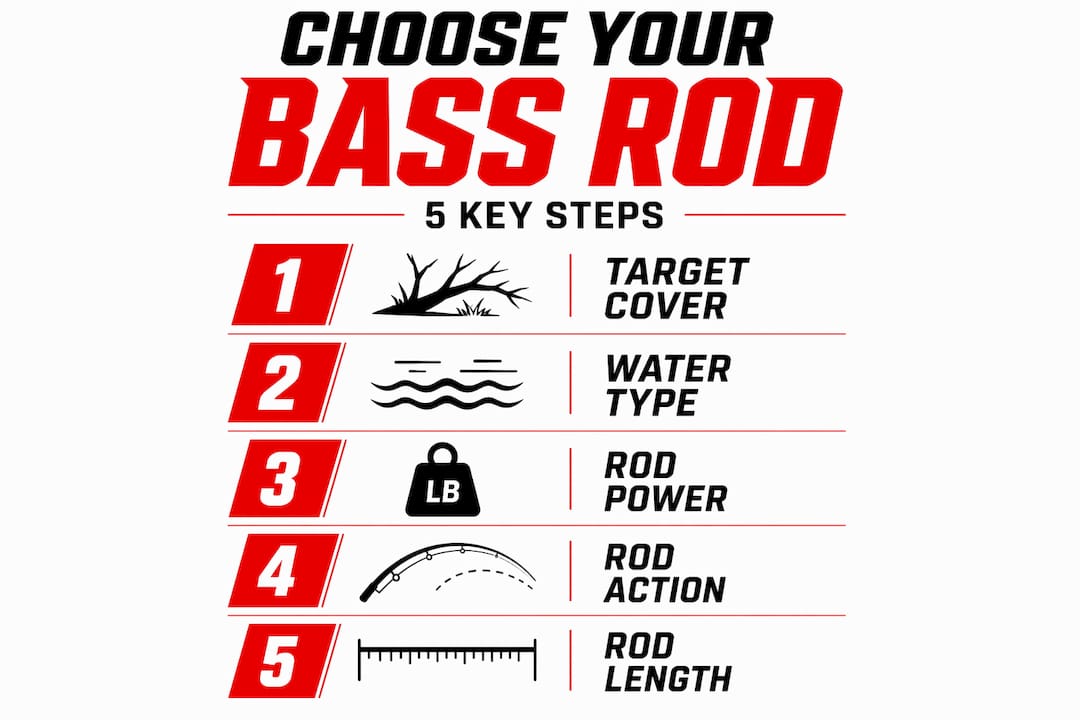
- Practical steps to select your bass rod
- My honest take on rod selection after years on the water
- Take your bass fishing further with Bassanglermag
- FAQ
Key takeaways
| Point | Details |
|---|---|
| Start with a versatile baseline | A 7-foot medium-heavy, fast action rod covers the majority of bass fishing situations for any skill level. |
| Match rod type to your experience | Spinning rods work best for beginners and finesse techniques; baitcasting rods reward anglers fishing heavier lures with precision. |
| Align action with lure type | Fast action for single-hook rigs like jigs and soft plastics; moderate action for treble-hook lures like crankbaits. |
| Adjust length to your environment | Shorter rods give you control in tight cover; longer rods deliver casting distance and leverage in open water. |
| Test before you commit | Handling a rod in-store tells you more about balance and comfort than any spec sheet ever will. |
How to choose a bass rod: the core specs explained
 Three specifications define every bass rod on the market: power, action, and length. Get these right and you’ve solved most of your selection puzzle.
Rod power refers to how much force it takes to bend the rod. It runs from ultralight through light, medium, medium-heavy, and heavy. Think of power as the rod’s backbone. Heavier power handles bigger lures and bigger fish. Lighter power gives you sensitivity with small presentations. For bass fishing, medium and medium-heavy are the most common choices, covering lures from about 3/8 oz to 1 oz with ease.
Rod action describes where along the blank the rod bends under load. Fast action rods bend near the tip, which translates directly into quicker hooksets and sharper sensitivity. Moderate action rods flex closer to the middle of the blank, which softens the load and keeps treble hooks pinned during a fight. Fast action rods bend at the top one-third, making them ideal for single-hook techniques, while moderate action handles treble-hook lures with fewer pullouts.
Rod length affects how far you cast, how accurately you place a lure, and how much leverage you have when fighting fish. Rod lengths from 6’6″ to 7’6″ cover nearly every bass scenario. A 7-foot rod is the most balanced starting point for most anglers. Check out Bassanglermag’s breakdown of rod action types for a deeper look at how these specs interact on the water.
Here’s a quick reference table to simplify your choices:
| Power | Action | Length | Best for |
|---|---|---|---|
| Medium | Moderate-fast | 6’6″ to 7’ | Finesse rigs, light jigs, spinning setups |
| Medium-heavy | Fast | 7’ to 7’3″ | Jigs, Texas rigs, spinnerbaits, all-around bass |
| Heavy | Fast | 7’3″ to 7’6″ | Flipping, pitching, heavy cover, big swimbaits |
| Medium | Moderate | 6’6″ to 7’ | Crankbaits, chatterbaits, treble-hook lures |
A 7-foot medium-heavy, fast action rod is widely considered the baseline setup that balances casting distance, sensitivity, and hookset power. If you only own one bass rod, this is it.
Spinning vs. baitcasting: matching rod type to skill level
This is where a lot of anglers get stuck. The choice between spinning and baitcasting isn’t just about skill level. It’s also about the techniques you want to fish.
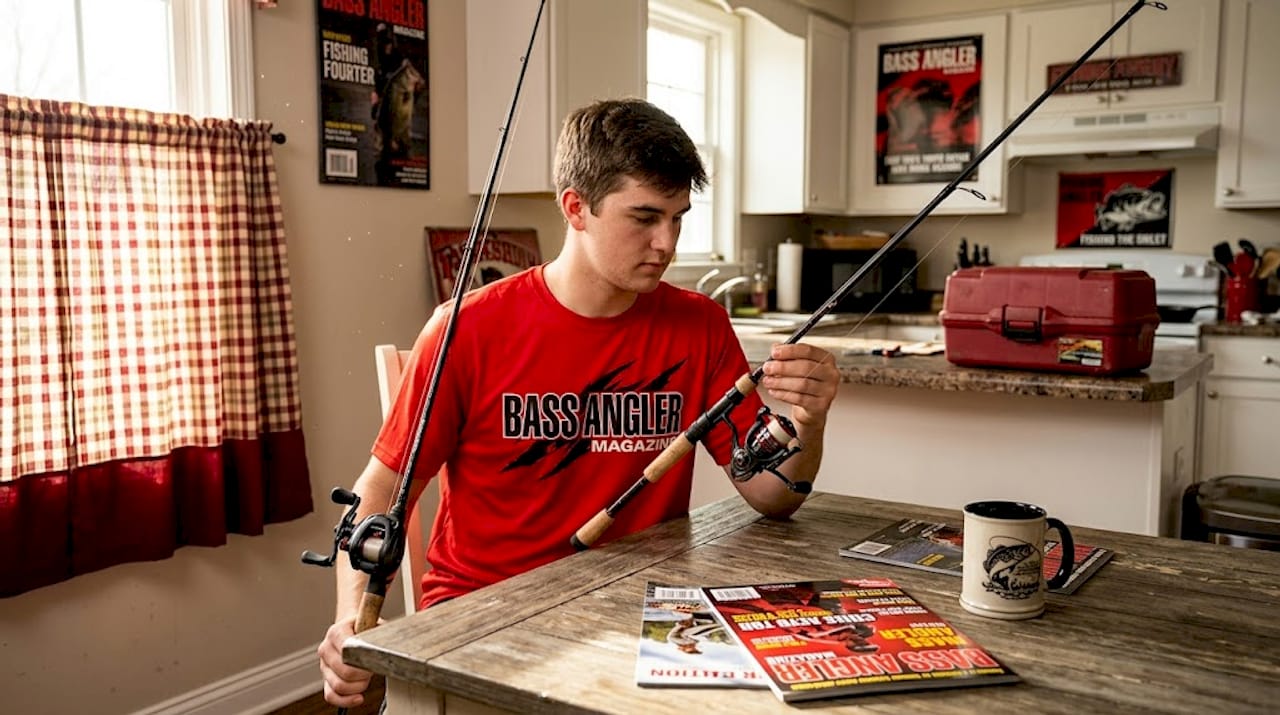
Spinning rods are easier to learn, making them the go-to for beginners and for finesse presentations at any skill level. They shine with lighter lures under 3/8 oz, and pairing them with a spinning reel makes the whole setup forgiving and fun. Baitcasting rods, on the other hand, offer better control and accuracy for heavier presentations. Experienced anglers favor them when flipping into cover, throwing big swimbaits, or needing the torque to pull fish out of thick grass. You can learn more about how these setups pair together in Bassanglermag’s guide to spinning reels for bass.
Spinning rod pros and cons:
- Pros: Easy to cast, works great with light lures and lines, less backlash risk, ideal for finesse techniques like drop shot and shaky head
- Cons: Less torque for heavy cover, line twist can be an issue, less suited for lures above 1/2 oz
Baitcasting rod pros and cons:
- Pros: Precision casting, better leverage, handles heavy lures and thick line, excels in flipping and pitching applications
- Cons: Steeper learning curve, backlash (bird’s nest) risk for beginners, generally more expensive
Pro Tip: If you’re new to baitcasting, start practicing with a 3/8 oz or 1/2 oz lure on a medium-heavy setup. That weight range gives you enough momentum to load the reel smoothly and reduces the backlash issues that send beginners straight back to spinning gear. Moderate-fast action rods also reduce lost fish and improve casting control for those still learning.
For a step-by-step look at choosing your very first rod, Bassanglermag has a dedicated first bass rod guide worth bookmarking.
Matching rod action and power to your technique
This is where bass rod selection gets genuinely exciting. The right pairing of action and power to a specific technique and lure type can transform a frustrating day on the water into a productive one.
Here’s a numbered list of the most popular bass fishing techniques and the rod specs that match each one best:
- Jig fishing: Medium-heavy power, fast action, 7’ to 7’3″. The sensitive tip picks up every bottom tick, and the fast action delivers a crisp hookset through heavy cover.
- Texas rig soft plastics: Medium-heavy, fast action, 7’. Same principles as jigging. You need to feel the bite and react quickly before the fish spits the bait.
- Drop shot: Medium or medium-light, fast action, 6’8″ to 7’. Finesse presentation demands sensitivity above all else.
- Crankbaits: Medium, moderate action, 7’. Moderate action rods absorb the lure’s movement and reduce the chance of fish throwing treble hooks during the fight.
- Swimbaits: Heavy, moderate-fast, 7’3″ to 7’6″. You need the backbone to handle big lures and the control to keep steady contact through the retrieve.
- Spinnerbaits: Medium-heavy, moderate-fast action, 7’. These lures benefit from a little give in the rod so fish don’t feel resistance and release the bait.
The crankbait scenario is worth extra attention. Many anglers fish crankbaits and deep-diving crankbaits on fast action rods because that’s what they own. The result? More lost fish. A fast action rod doesn’t cushion the fight, and those treble hooks pop free under pressure.
Pro Tip: Resist the urge to use one rod for everything. Two well-chosen setups cover far more ground than one all-purpose rod that compromises every technique. A fast action medium-heavy for plastics and jigs paired with a moderate action medium for crankbaits will improve your catch rate noticeably.
Adjusting your rod based on the fishing environment
The body of water you fish and the cover type you’re targeting should shape your rod selection just as much as your technique does.
Tight cover and heavy vegetation call for shorter, heavier setups. Heavy power rods with fast action and braided line are built for flipping and pitching into thick aquatic cover. A 7’3″ heavy power rod gives you the leverage to pull a four-pound bass straight up through matted grass before it can use the weeds against you. Shorter rods in the 6’6″ to 6’10″ range also work well under docks and overhanging trees where a long rod becomes a liability.
Open water lakes and reservoirs reward longer rods. A 7’3″ or 7’6″ rod gives you extra casting distance when you’re covering large flats or working offshore structure. The added length also helps with long-distance hooksets, which matters when you’re fishing a crankbait on 50 feet of line.
Rivers and ponds often require middle-ground setups. Ponds typically have close quarters and light cover, so a 7-foot medium setup handles most situations. Rivers demand attention to current, and you’ll often find that a slightly longer rod helps manage line drag while keeping contact with bottom-bouncing lures.
Here are key environmental factors to consider when adjusting your rod:
- Heavy cover: Go heavier in power (heavy or extra-heavy), use fast action, pair with braided line for zero stretch
- Open water: Prioritize length (7’3″ and above) and casting efficiency, fluorocarbon for natural presentations
- Shallow, clear water: Lighter power, longer casts to stay away from fish, spinning setups excel here
- Docks and structure: Shorter rods for precision flips and pitches, medium-heavy power for control
For jig fishing applications around structure, Bassanglermag’s piece on the scrounger vibrating jig covers ideal rod setups in great detail.
Practical steps to select your bass rod
Pulling all of this together into a clear selection process makes the decision much less stressful. Here’s how to work through it:
- Identify your primary fishing conditions. Are you fishing open lakes, heavy cover, rivers, or ponds? This defines your power and length range before anything else.
- Decide on rod type. Beginner or finesse angler? Go spinning. Ready to handle heavier lures and tight-quarters accuracy? Go baitcasting.
- Select power and action. Match these to your most-used technique and lure. When in doubt, medium-heavy fast action is your best starting point.
- Choose your length. Tight cover pushes you shorter. Open water and distance fishing push you longer. The 7-foot range covers most in-between situations.
- Test the rod before buying. Hold it, feel the balance, and flex the tip. Comfort and grip fit matter just as much as specs.
| Step | What to decide | Recommendation |
|---|---|---|
| 1 | Primary conditions | Identify cover, water type, and target species size |
| 2 | Rod type | Spinning for beginners/finesse; baitcasting for experience/heavy lures |
| 3 | Power and action | Medium-heavy fast as your baseline |
| 4 | Length | 7’ for general use; adjust shorter or longer by environment |
| 5 | Physical test | Handle the rod, check grip, feel the action in person |
My honest take on rod selection after years on the water
I’ve watched anglers at every level overthink this process and underthink it in equal measure. The anglers who struggle most are usually the ones chasing trends, buying what a pro won a tournament on, without asking whether that setup actually fits how they fish.
In my experience, the 7-foot medium-heavy fast action rod deserves every bit of praise it gets. It’s not glamorous, but it genuinely handles Texas rigs, jigs, spinnerbaits, and bladed jigs without complaint. For someone just getting serious about bass fishing, owning one of these well before adding specialized rods is the smartest move I know.
What I’ve also learned is that specs on paper lie a little. Two rods with identical specs can feel completely different in your hand. One might feel tip-heavy and awkward. The other feels like an extension of your arm. That difference only reveals itself when you actually pick it up. No bass rod buying guide, including this one, can substitute for that hands-on moment.
The other mistake I see is anglers holding onto beginner setups long past the point where they’ve outgrown them. As your technique library grows, so should your rod selection. That’s not about spending money. It’s about matching gear to your actual fishing goals so you keep improving.
— Mark
Take your bass fishing further with Bassanglermag
Ready to build on what you’ve learned here? Bassanglermag is packed with expert gear reviews, technique breakdowns, and tournament coverage designed for anglers at every stage of the sport. Whether you’re picking up your first rod or fine-tuning a tournament-ready setup, there’s something here to help you catch more fish.
Check out the 2025 Winter Issue for in-depth rod reviews, seasonal bass fishing strategies, and gear recommendations straight from experienced anglers who spend serious time on the water. From baitcasting setups to finesse gear for clear-water conditions, every issue delivers the kind of specific, tested advice that actually makes a difference. The BAM community is growing fast, and there’s never been a better time to get involved.
FAQ
What rod power is best for bass fishing?
Medium-heavy power is the most versatile choice for bass fishing, handling lures from 3/8 oz to 1 oz and working across a wide range of techniques. Heavy power makes more sense when you’re targeting big bass in thick cover with flipping and pitching presentations.
What length rod should I use for bass fishing?
A 7-foot rod is the most practical starting length for bass fishing, offering a balance of casting distance, accuracy, and leverage. Rod lengths from 6’6″ to 7’6″ cover the full range of bass fishing scenarios depending on cover density and water type.
Should beginners use spinning or baitcasting rods?
Beginners should start with a spinning rod because it’s easier to cast, less prone to tangles, and works well with lighter lures and finesse techniques. Moving to a baitcasting setup makes sense once you’re comfortable with heavier lures and want more casting precision.
What rod action is best for crankbaits?
Moderate action rods are better for crankbaits because the deeper flex absorbs head shakes and reduces the chance of fish throwing treble hooks during the fight. A fast action rod is too stiff for this application and leads to more lost fish.
How many bass rods do I really need?
Two rods cover the vast majority of situations: one medium-heavy fast action setup for jigs, plastics, and power techniques, and one medium moderate action setup for crankbaits and treble-hook lures. Adding a dedicated finesse spinning rod as a third option rounds out almost any bass fishing scenario you’ll face.