
Heavy cover is where big bass live, and it’s also where most anglers lose their nerve, their lures, and their fish. Thick mats of hydrilla, laydowns packed with timber, and tangled vegetation create a wall between you and the biggest bass in the lake. The wrong rod, the wrong line, or a hesitant hookset means heartbreak every time. This guide covers exactly what you need: the right gear, step-by-step rigging, proven presentation techniques, and a troubleshooting checklist that helps you land more fish and lose fewer to the cover.
Table of Contents
- Essential gear for heavy cover success
- Setting up for success: Rigging and preparation
- Perfecting your presentation: Techniques that produce
- Troubleshooting: Overcoming common mistakes in heavy cover
- The real difference: What top anglers do that others miss
- Upgrade your heavy cover game with Bass Angler Magazine
- Frequently asked questions
Key Takeaways
| Point | Details |
|---|---|
| Specialized gear matters | Using heavy-action rods, braided line, and strong jigs is critical for heavy cover bass fishing. |
| Presentation timing is crucial | Most bites happen during the bait’s initial fall or first hops, so stay alert from the moment it hits the cover. |
| Adapt to conditions | Slower presentations work best after cold fronts or when fish are less active. |
| Troubleshoot for improvement | Analyze your misses and gear failures to refine your setup and technique for future success. |
Essential gear for heavy cover success
To fish heavy cover successfully, your gear is your foundation. Let’s break down what works and why.
Heavy cover demands specialized equipment because standard bass tackle simply isn’t built for the stress. A 7-foot medium-action rod might work great on open water, but drop a jig into a hydrilla mat with that setup and you’ll quickly find out why pros reach for something much heavier. The cover itself creates friction, absorbs energy, and gives a hooked fish every advantage. Your gear has to compensate for all of that.
The rod is your first line of defense. A heavy-action, fast-tip rod in the 7-foot 3-inch to 7-foot 6-inch range gives you the backbone to drive a hook through a bass’s jaw while still offering enough sensitivity to feel a subtle bite through three feet of matted grass. Pair that with a high-speed reel, something in the 8:1 gear ratio range, and you can pick up slack line fast enough to get tight on a fish before it wraps you in cover.
Flipping jigs are built for heavy cover with strong hooks, stiff weed guards, and heavier weights. Braided line in the 50 to 65 lb range is recommended, along with a heavy-action rod and high-speed reel. That combination gives you the power to punch through dense mats and control a fish immediately after the strike.
Your optimal rod and line choices can make or break your day in vegetation. Braided line is the clear winner in heavy cover because of its near-zero stretch and incredible abrasion resistance. When a bass inhales your jig inside a mat and bolts for the thickest part of the grass, braid is the only line that gives you a fighting chance.
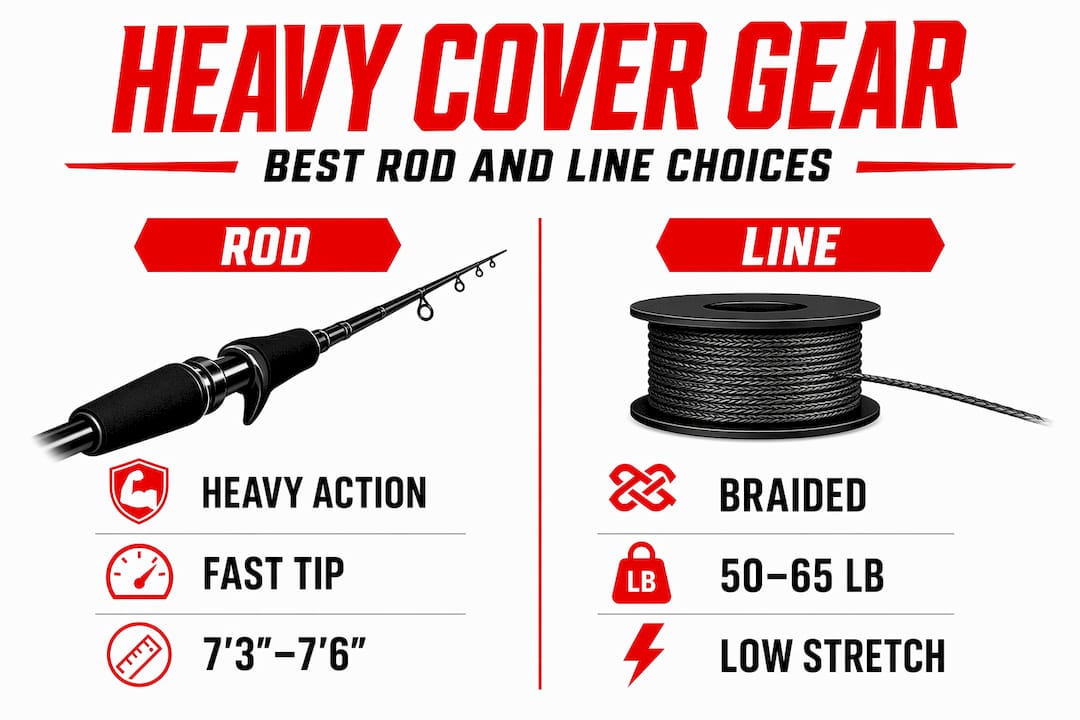
Here’s a quick-glance gear table to help you build the right setup:
| Gear Component | Recommended Spec | Why It Matters |
|---|---|---|
| Rod | 7’3″ to 7’6″ heavy, fast action | Power for hooksets, sensitivity for bites |
| Reel | High speed, 7:1 to 8:1 ratio | Fast line pickup after the strike |
| Line | 50 to 65 lb braided | Abrasion resistance, zero stretch |
| Jig weight | 3/8 oz to 1 oz tungsten | Punches through cover efficiently |
| Hook | Heavy wire, wide gap | Holds up under pressure |
| Weed guard | Stiff bristle, multi-strand | Deflects cover, allows hooksets |
Key gear considerations at a glance:
- Use tungsten weights over lead for a smaller profile that punches through cover more cleanly
- Choose a jig with a full weedguard, not a single-strand guard, for dense mats
- Match your jig color to the bottom composition (dark colors for dark bottoms, natural greens for vegetation)
- Spool your reel completely to maximize casting distance and line management
Pro Tip: When rigging your flipping technique and tackle, tie your braid directly to the jig using a Palomar knot. This knot maintains nearly 100% line strength and won’t slip under the pressure of a heavy hookset. Skip the snap swivel. Every connection point is a potential failure point, and in heavy cover, you can’t afford one.
Setting up for success: Rigging and preparation
Once you have your gear, it’s all about putting it together right. Setup matters as much as gear selection.
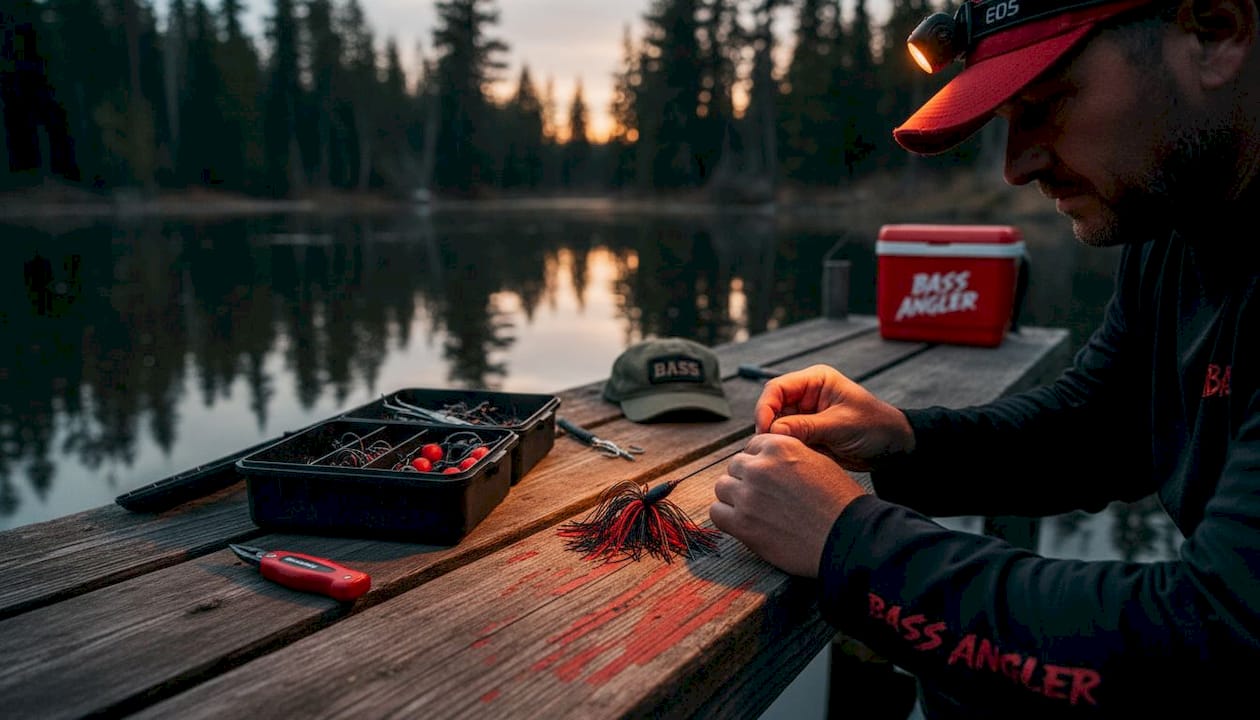
A lot of anglers spend money on quality rods and reels but then rush through the rigging process. That’s a mistake. The way you assemble your setup determines how efficiently you fish, how many hang-ups you deal with, and whether your gear holds up when a 5-pound bass goes ballistic inside a mat.
Here’s a step-by-step rigging process that works:
- Spool your reel with 50 to 65 lb braid. Fill it to within 1/8 inch of the spool lip for maximum casting performance.
- Tie a Palomar knot directly to your jig. Double your braid, pass it through the eye, tie an overhand knot, then pass the loop over the entire jig before pulling tight.
- Select your jig weight based on cover density. Lighter grass or sparse wood calls for 3/8 oz. Thick, matted hydrilla or layered grass mats need 3/4 oz to 1 oz.
- Adjust your weed guard. Spread the bristles slightly for heavy mats where you need more deflection. Tighten them for sparse cover where you want a cleaner hookset.
- Inspect your hook point before every drop. A dull hook in heavy cover is a missed fish. Touch-up with a hook file or replace the jig.
- Check your line for abrasion after every fish or snag. Braid is tough, but repeated contact with wood or hard grass stems can weaken it over time.
Heavier jig weights help punch through grass and wood, and braid in the 50 to 65 lb range delivers the best strength and cutting power. These aren’t suggestions. They’re the baseline for fishing heavy cover with any consistency.
Here’s how the main line choices compare for heavy cover:
| Line Type | Abrasion Resistance | Stretch | Visibility | Best Use in Cover |
|---|---|---|---|---|
| Braided (50-65 lb) | Excellent | Near zero | High | Primary choice for mats and timber |
| Fluorocarbon (20-25 lb) | Good | Low | Very low | Sparse cover, clear water |
| Monofilament (17-20 lb) | Moderate | High | Moderate | Not recommended for heavy cover |
Why does vegetation rigging favor braid so heavily? It comes down to feel and force. When a bass bites inside three feet of matted grass, you’re not feeling the tap directly. You’re feeling a slight pressure change transmitted through the line. Braid’s zero-stretch transfers that signal instantly. Mono absorbs it.
Pro Tip: If water clarity is high and you’re worried about line visibility, add a 12 to 18 inch fluorocarbon leader using an Alberto knot. You get why braid excels in heavy cover with the low-visibility benefit of fluorocarbon near the bait. Keep the leader short. Long leaders defeat the purpose of using braid in the first place.
Perfecting your presentation: Techniques that produce
With your rig in hand, success comes down to how you deliver the bait. This is where technique separates pros from amateurs.
The punch-through principle is simple: your weight must break through the surface of the mat cleanly and consistently. If your jig is hanging up on top or barely making it through, you’re not fishing the strike zone. Bass in matted cover hold tight to the bottom of the mat or just below it, often suspended in a shaded pocket where they feel protected. You have to get your bait into that space.
“Set up so your weight punches through at least 90% of the time. Bites come on the initial fall or early hops. Adjust your cadence slower after cold fronts.” This
mat-punching instruction principle is the foundation of consistent heavy cover success.
Here’s a step-by-step presentation sequence:
- Position your boat parallel to the mat edge or directly over the target zone using your trolling motor.
- Pendulum your jig into position using a short, controlled flip or pitch. Keep the cast quiet to avoid spooking fish.
- Watch your line as the bait falls. A twitch, jump, or sudden slack in the line means a fish picked it up. Set the hook immediately.
- If no bite on the fall, hop the bait twice with short, sharp lifts of the rod tip. Most strikes happen here.
- Move the bait two to three feet and repeat. Don’t sit in one spot too long. Cover water efficiently.
- When you get a bite, set hard and immediately reel. Sweep the rod to the side and crank down fast. Every second gives the fish more time to tangle you.
Presentation variations to adapt to different scenarios:
- Cold front conditions: Slow everything down. Let the bait sit for 3 to 5 seconds between hops. Bass are lethargic and need time to commit.
- Active feeding periods: Speed up the cadence. Aggressive hops and faster movement trigger reaction strikes.
- Timber and laydowns: Drag the bait along wood structure rather than hopping it. Let it fall naturally off ledges and branch intersections.
- Sparse mats: Reduce weight to 3/8 oz and slow the fall for a more natural presentation.
- Deep mats (4 feet or more): Go heavier, up to 1 oz, to maintain contact and punch through multiple layers.
Fishing matted grass is all about repetition and efficiency. The angler who covers the most productive water with the most accurate presentations wins. That’s not luck. That’s learned skill.
Troubleshooting: Overcoming common mistakes in heavy cover
Even with the best technique, heavy cover fishing tests every link. Here’s how to diagnose and overcome the most common setbacks.
Every angler who fishes heavy cover regularly knows the frustration of a missed bite or a fish that throws the hook before you can land it. The good news is that most of these failures are preventable. They come down to a short list of repeating mistakes.
Common mistakes and how to fix them:
- Using line that’s too light. If you’re fishing 20 lb fluorocarbon in a mat, you’re going to lose fish. Period. Step up to braid.
- Weed guard too soft. A soft weed guard lets the hook point contact grass on every drop, dulling it fast and causing missed hooksets. Use a stiffer guard for dense cover.
- Hookset direction is wrong. In heavy cover, sweep the rod to the side rather than straight up. This drives the hook home and starts moving the fish toward you simultaneously.
- Waiting too long to set. Bass in cover don’t hold the bait. They grab it and move. Set the hook the moment you feel anything unusual.
- Straightened hooks. This is a gear problem. Strong hooks, stiff weed guards, and heavier line prevent the most common rig failures in heavy cover. If your hooks are straightening, you’re using the wrong jig for the weight of fish you’re targeting.
- Not checking your line. Braid frays against hard cover over time. Run your fingers along the last few feet of line after every fish or snag.
Pro Tip: Build a “failure points” checklist you run through after every missed fish. Check the hook point, inspect the weed guard, test the knot, and look for line abrasion. This habit, done consistently, will reveal patterns in your misses and help you fix tackle and equipment issues before they cost you another fish. Also review your hook selection regularly. Heavy cover demands heavy-wire hooks, and not all jig hooks are created equal.
The real difference: What top anglers do that others miss
Troubleshooting solves today’s problems, but out-fishing the pack is about applying hard-won knowledge. Here’s what separates real results from routine failure.
Most anglers who struggle in heavy cover aren’t making big mistakes. They’re making small ones, repeatedly. The biggest gap between average anglers and top performers isn’t gear. It’s attention to detail on every single cast.
Cadence adjustment is the most underutilized skill in heavy cover fishing. When conditions change, whether it’s a passing cloud, a temperature drop, or a shift in wind, the fish respond. Top anglers notice those changes and adjust within a few casts. Most anglers keep doing what they were doing an hour ago and wonder why the bite dried up.
The stat that matters most: the majority of heavy cover strikes happen on the initial fall or the first two hops. If you’re not watching your line the moment the bait breaks through the mat, you’re missing bites you don’t even know you’re missing. That’s wasted opportunity on every single cast.
Top anglers also do a quick self-check after every cast. Did the bait punch through cleanly? Did the fall feel right? Was there any hesitation that could have been a bite? This habit builds a mental database of feedback that drives better decisions. It’s not something you can buy. It’s something you build through focused practice.
Micro-adjustments in weight and line choice open up strike opportunities that others walk right past. Dropping from a 3/4 oz to a 1/2 oz jig in slightly thinner cover can slow the fall enough to trigger fish that were ignoring the faster presentation. These are the kinds of adjustments that don’t show up in a tackle catalog but absolutely show up in your catch count.
Learning from short strikes and hang-ups is more valuable than any gear upgrade. Every time a fish follows but doesn’t commit, that’s information. Every hang-up tells you something about the structure. The anglers who pay attention to those details consistently out-fish the ones who just make another cast.
Upgrade your heavy cover game with Bass Angler Magazine
Ready to take these tactics even further? The right resources can fast-track your mastery in any condition.
Bass Angler Magazine is packed with expert content built specifically for anglers who want to fish smarter and catch more. Whether you’re chasing a personal best or competing on the BAM Tournament Trail, we’ve got the deep-dive technique articles and competitive insights you need.
Explore pro vegetation tactics from top professionals, get tournament tips from anglers who compete at the highest level, and learn exactly how to start catching the biggest bass of your season right now. BAM exists to help you become a better angler, and every article, video, and event is built around that mission. Dive in and start fishing heavier cover with real confidence.
Frequently asked questions
What line weight is best for bass fishing in heavy cover?
Braided line between 50 and 65 lb test is the most effective option for cutting through vegetation and delivering the hookset power you need in heavy cover.
How do I know what jig weight to use for punching mats?
Choose a tungsten weight that punches through cover at least 90% of the time. Weights in the 3/8 to 1 oz range are most common depending on mat thickness.
When should I slow down my bait presentation in heavy cover?
After a cold front or during colder water conditions, slow your cadence significantly and allow longer pauses between hops to match less active bass.
What’s the top mistake anglers make when fishing heavy cover?
Most anglers use line that’s too light or fail to rig for reliable mat penetration. Strong hooks, stiff weed guards, and heavier line are the foundation of consistent heavy cover success.