
Fish care stations are specialized facilities at bass fishing tournaments designed to keep caught fish alive, healthy, and stress-free from the moment they leave the water until they are released. Every serious tournament angler needs to understand why fish care stations exist in tournaments, because the stakes go far beyond good sportsmanship. A single dead fish costs you 4 ounces of tournament weight, which can drop you multiple places in the standings and disqualify that fish from Big Bass prizes. Fish care stations solve a real, measurable problem, and knowing how they work gives you a competitive and ethical edge.
Why fish care stations exist in tournaments
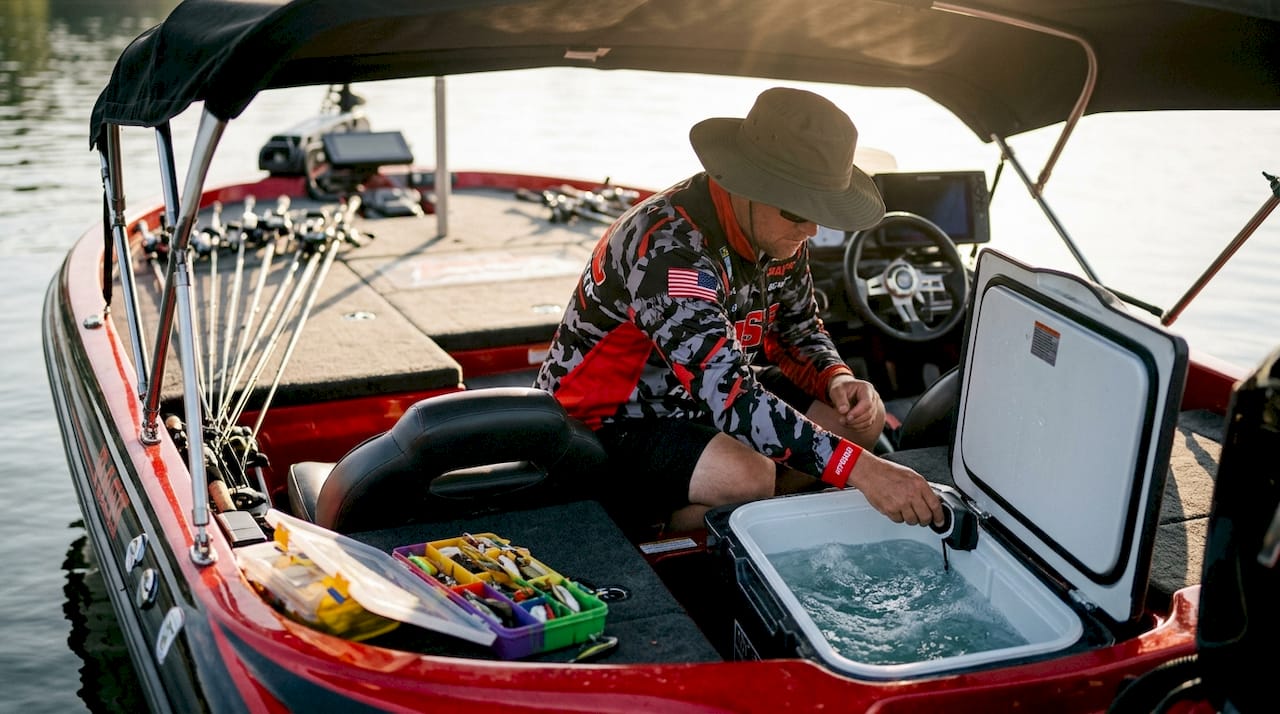
Fish care stations exist because tournament conditions create serious biological risks for bass that no individual angler’s livewell can fully address alone. When dozens or hundreds of fish are held in confined spaces for hours, the combination of heat, low oxygen, and stress creates a perfect storm for mortality. These stations provide a centralized, professionally managed environment where fish health is actively monitored and maintained.
The core problem is biology. Bass are cold-blooded animals, and their metabolism accelerates sharply as water temperature rises. Thermal stress and oxygen starvation cause biological failure and death when critical thresholds are breached. Fish care stations exist specifically to prevent those thresholds from being crossed during the high-pressure window between catch and release.
Tournament organizations including B.A.S.S. and the Bass Pro Tour have recognized for years that fish mortality is both an ethical failure and a competitive integrity issue. When fish die before weigh-in, the results are distorted and the fishery suffers. Fish care stations address both problems at once, making them a non-negotiable part of responsible tournament management.
What are the main functions of fish care stations?
Fish care stations operate as controlled environments built around two non-negotiable standards: dissolved oxygen above 5.5 ppm and water temperature below 84°F. Breaching either threshold accelerates bass mortality rapidly. Stations use aeration systems, water chillers, and continuous water quality monitoring to hold those numbers steady throughout the event.
The key functions of a properly run fish care station include:
- Aeration management: Pumps cycle continuously to maintain oxygen saturation above the critical 5.5 ppm threshold, preventing suffocation in crowded holding tanks.
- Temperature control: Water is actively cooled, often pre-chilled significantly below ambient lake temperature, to prevent thermal shock during summer events.
- Water exchange: Fresh water is cycled in regularly to dilute ammonia and waste, which build up fast in high-density holding conditions.
- Chemical treatment: Additives detoxify ammonia and reduce stress hormones, going well beyond what aeration alone can accomplish.
- Fizzing and barotrauma treatment: Fish caught from deep water often suffer barotrauma, where the swim bladder over-inflates. Trained staff use fizzing needles to release trapped gas and restore buoyancy.
- Handling protocols: Staff are trained to minimize air exposure, use wet hands, and support fish properly to reduce physical stress.
The difference between a fish care station and a standard boat livewell is significant. A livewell holds fish passively. A fish care station actively manages water chemistry, temperature, and fish condition with trained personnel and purpose-built equipment.
Pro Tip: Pre-cool your livewell water 8–10°F below ambient lake temperature before your first catch. This single step dramatically reduces thermal shock risk during summer tournaments and mirrors the standard used at professional fish care stations.
What problems do fish care stations solve for tournament anglers?
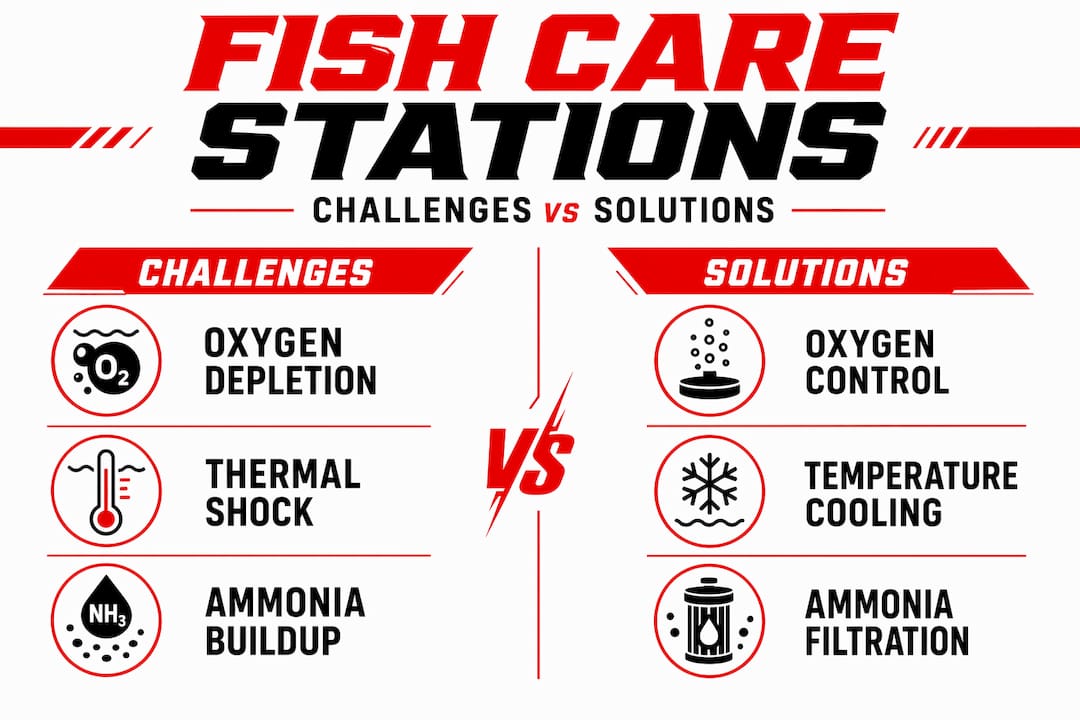
The problems fish care stations solve fall into three clear categories: biological, environmental, and competitive.
| Problem | Without a Fish Care Station | With a Fish Care Station |
|---|---|---|
| Oxygen depletion | Fish suffocate in crowded livewells | Aeration maintains levels above 5.5 ppm |
| Thermal stress | Summer heat spikes cause rapid mortality | Active cooling holds water below 84°F |
| Ammonia buildup | Waste accumulates and poisons fish | Regular water exchange and additives neutralize toxins |
| Barotrauma | Deep-caught fish float and die | Trained staff fizz fish and restore buoyancy |
| Delayed mortality | Fish appear healthy but die post-release | Proper treatment reduces post-release death rates |
Biologically, bass face thermal shock, oxygen starvation, and ammonia poisoning during prolonged holding. These are not rare edge cases. They happen at nearly every summer tournament where fish care is not actively managed. Ammonia buildup risks are particularly underestimated because anglers focus on oxygen while ignoring water chemistry.
From a competitive standpoint, the 4-ounce dead fish penalty is brutal. Championships are decided by ounces. Losing two or three fish to preventable mortality can cost an angler thousands of dollars in prize money and a top-ten finish. Fish care stations protect that investment by giving every fish the best possible chance of surviving to weigh-in.
Delayed mortality is the most misunderstood problem in tournament fishing. A fish can swim away from weigh-in looking perfectly healthy and die hours later from cumulative stress. Transparency about fish survival rates is now a growing demand from conservation groups and serious anglers alike. Fish care stations reduce delayed mortality by treating fish before release, not just keeping them alive long enough to be weighed.
How do fish care stations benefit anglers and fisheries long-term?
The benefits of fish care stations extend well beyond any single tournament day. They protect anglers, fisheries, and the sport itself in ways that compound over time.
- Fewer penalties, more money: Anglers who deliver healthy fish to weigh-in avoid the dead fish penalty and keep their full weight intact. Over a season, that adds up to real dollars and real standings.
- Healthier fisheries: When post-release survival rates are high, fish populations stay strong. Strong populations mean better fishing for everyone, year after year.
- Ethical credibility: Tournaments that demonstrate genuine fish care earn public trust and social license to operate. That trust is what keeps waterways open to competitive fishing.
- Data collection: Fish care stations create opportunities to monitor fish condition, track mortality trends, and improve protocols over time. That data feeds directly into better tournament management.
- Positive public perception: Catch-and-release tournaments face scrutiny when fish survival is questioned. Visible, professional fish care stations signal that the sport takes conservation seriously.
Tournament experts regard fish care as a disciplined science. Top anglers treat their livewells with the same focus they give their fishing strategy. Fish care stations extend that discipline to the entire event, not just individual boats. The result is a sport that can defend its conservation record with facts, not just intentions.
You can find more warm-weather fish care strategies in Bassanglermag’s guide on warm-season fish survival, which covers practical steps every tournament angler can apply before the water heats up.
What are the evolving standards shaping modern fish care stations?
Fish care at tournaments has moved far beyond a bucket of water and a prayer. Modern standards reflect years of scientific research, regulatory pressure, and hard lessons learned from high-profile fish kills at major events.
- Water chemistry protocols: Clubs and tournament organizations now mandate specific dissolved oxygen and temperature thresholds, not just aeration equipment. The standard is above 5.5 ppm oxygen and below 84°F water temperature, enforced at the station level.
- Release boats: Release boats distribute fish across diverse habitats after weigh-in rather than dumping them all in one spot. This reduces displacement stress and prevents the stockpiling that happens when hundreds of fish are released in a single location.
- Chemical treatment programs: Stations now use approved additives to neutralize ammonia and reduce stress hormones. Chemical additives and water exchanges work together to detoxify holding water far more effectively than aeration alone.
- Hot-weather restrictions: Some events now adopt immediate weigh-and-release formats during extreme heat. Others reduce bag limits specifically for fish-care reasons, acknowledging that holding large bags in summer conditions creates unacceptable mortality risk.
- Formal club policies: Tournament organizations enforce formal fish care policies with real consequences. These rules reflect the sport’s commitment to sustainability and its need to maintain public acceptance.
Pro Tip: If you fish summer tournaments, ask the event director about the fish care station’s cooling setup before you launch. Knowing the station can handle temperature management lets you focus on fishing instead of worrying about your livewell.
The trend toward stricter standards is accelerating. Catch-and-release tournaments face backlash when they cannot prove high survival rates. That pressure is pushing organizers to invest in better equipment, better training, and more transparent reporting. Fish care stations are at the center of that shift.
Understanding tournament bass fishing disqualifications helps anglers see exactly how fish mortality translates into lost weight and lost standings, making the case for fish care stations even clearer.
Key Takeaways
Fish care stations are the single most effective tool tournaments have for protecting fish health, maintaining competitive fairness, and sustaining fisheries for future generations.
| Point | Details |
|---|---|
| Core purpose | Fish care stations maintain oxygen above 5.5 ppm and temperature below 84°F to prevent bass mortality. |
| Penalty protection | A dead fish costs 4 ounces of weight, making fish survival a direct financial and competitive concern. |
| Beyond aeration | Ammonia buildup requires chemical additives and water exchange, not just oxygen pumps. |
| Release boats matter | Distributing fish across diverse habitats after weigh-in reduces displacement stress and stockpiling. |
| Evolving standards | Formal policies, hot-weather restrictions, and immediate release formats are now part of modern tournament management. |
Fish care stations are the sport’s most underrated competitive tool
I have watched anglers spend thousands of dollars on electronics, rods, and entry fees, then lose a tournament because two fish died in a livewell that was never properly managed. That stings in a way that bad fishing decisions do not, because it was completely preventable.
The way I see it, fish care is not a conservation add-on. It is core tournament strategy. When you treat every fish like it represents money on the scale, because it does, your entire approach to handling and holding changes. You stop being casual about livewell temperature. You start paying attention to water exchange cycles. You ask questions at the fish care station instead of just dropping your bag and walking away.
What concerns me most is how many club-level tournaments still run without formal fish care protocols. The big professional events have invested in proper stations and trained staff. Local and regional events often have not caught up. That gap is where most preventable mortality happens, and where the sport’s conservation reputation takes the most damage.
My encouragement to every angler reading this: push your club to adopt written fish care policies. Support events that invest in proper stations. And take the time to learn the science yourself, because the anglers who understand water chemistry and temperature management consistently outperform those who do not. The fish care station is not just there for the fish. It is there for you.
— Mark
Bassanglermag has the tournament resources you need
Bassanglermag covers tournament fishing from every angle, including the fish care knowledge that separates good anglers from great ones. Whether you are preparing for your first club event or chasing a BAM Trail qualifier, the right information makes a real difference on the water.
From warm-weather survival tips to full tournament strategy breakdowns, Bassanglermag delivers content built for anglers who take the sport seriously. Explore the underwater world of bass fishing to deepen your understanding of bass biology and behavior, which feeds directly into smarter fish care decisions at every tournament you enter. The BAM community is here to help you fish better, compete smarter, and keep the sport growing for everyone.
FAQ
What is the purpose of a fish care station at a tournament?
A fish care station maintains water oxygen above 5.5 ppm and temperature below 84°F to keep tournament bass alive and healthy from catch to release. It also provides barotrauma treatment, water exchange, and chemical detoxification that individual livewells cannot match.
How much does a dead fish cost in a bass tournament?
A dead fish typically costs an angler 4 ounces of total weight, which frequently decides placements and disqualifies that fish from Big Bass prizes. Over a full event, multiple dead fish can mean the difference between a top finish and falling out of the money entirely.
Why is aeration alone not enough in a fish care station?
Aeration manages oxygen but does nothing to control ammonia buildup, which accumulates rapidly in high-density holding tanks. Chemical additives and regular water exchanges are required to detoxify the water and prevent ammonia poisoning alongside oxygen management.
What is a release boat and why does it matter?
A release boat distributes fish across multiple habitat areas after weigh-in rather than releasing them all in one location. This prevents stockpiling stress and displacement, and is now considered best ethical practice for tournament fish conservation.
Are fish care standards getting stricter at tournaments?
Yes. Tournament organizations now enforce formal fish care policies covering aerator cycles, water quality standards, and mandatory release boats. Some events have adopted immediate weigh-and-release formats and reduced bag limits during hot weather to protect fish survival rates.