
Moon phase is a useful clue for bass fishing, but it is not a switch. Full and new moons can line up with spawning and with changes in when bass feed, yet the research shows the effect is modest and changes with the season. Use the moon to choose between good options, then let season, weather and water conditions make the final call.
Below, we cover what the data says about full moons and new moons, how the effect shifts from spring to fall, and a simple way to work lunar information into a trip plan, whether you fish weekends or tournaments.
TL;DR
- A Texas Parks and Wildlife review of big-bass catches found more fish near a full moon than a new moon, but it credits angler effort, not the moon, as the bigger factor.
- The moon matters most in spring, when a full or new moon is one of the cues that can line up with spawning.
- In fall and winter, a Canadian tracking study found no consistent lunar pattern in bass activity or depth.
- Treat moon phase as a tiebreaker. Never cancel a trip over a weak lunar forecast.
- Weather, water temperature, light and time of day usually decide the day. Pick the moon last.
Table of Contents
- What the moon is supposed to do to bass
- Is bass fishing good during a full moon?
- New moon bass fishing: dark nights, daytime bites
- The spring spawn: where the moon matters most
- What the science says about season and lunar cycles
- Moonrise, moonset and solunar windows
- How to put it all together
- For tournament anglers
- Get more from Bass Angler Magazine
- FAQ
- Sources
What the moon is supposed to do to bass
The idea is simple. The moon’s position and brightness change when and how well predators can hunt. A bright full moon lights up the water at night, so many anglers believe bass feed heavily after dark and are less hungry the next morning. A new moon is dark, so the thinking goes that bass shift more feeding into daylight, and the morning bite can be strong.
That is a widely held angler theory. It makes sense on the water, and plenty of anglers keep logs that back it up. It is not a guarantee, and the research below shows why you should treat it as one input among several.
Is bass fishing good during a full moon?
Sometimes, but the numbers are less dramatic than the folklore. Texas Parks and Wildlife looked at its ShareLunker program records and reported that 22% of the big bass were caught within two days of a full moon, versus 14% within two days of a new moon. That looks like a point for the full moon.
The same report adds an important note. Anglers fishing Friday through Monday landed 65 percent of the big fish. That points to how much people were on the water, which suggests angler effort influences catch rate more than moon phase does. It also notes that anglers who believe in the moon may fish harder around it, which can skew the data.
What that means for you:
- A full moon is a fine time to fish, and big fish do get caught around it.
- A full moon is not a reason to expect a bigger bite than any other well-timed day.
- Showing up more often does more for your catch than waiting for the perfect moon.
Fishing a full moon day by day
If you do fish around a full moon, think about when the bass fed rather than whether they did. Many anglers find that bright nights can leave the morning bite slower, then pick up later as the day warms and the light shifts. That is a pattern to test in your own logbook, not a rule. Slow your presentation, fish around cover, and give the afternoon a fair shot.
For how light and time of day change the bite on any moon, our guide on bass fishing in the morning versus the evening walks through the trade-offs.
New moon bass fishing: dark nights, daytime bites
A new moon gives you the darkest nights of the month. The common angler view is that with little moonlight, bass lean more on daylight feeding, so the first hours after sunrise and the last hours before sunset can be productive. Note that TPWD’s big-bass data showed fewer fish within two days of a new moon than of a full moon, so a new moon is no shortcut to bigger fish in that dataset.
Where the new moon earns attention is in the spring. More on that next.
The spring spawn: where the moon matters most
Spring is when lunar timing gets the most real. Largemouth don’t spawn on a calendar date. Water temperature is the main trigger, and bass move to spawn when water reaches the 60 to 70°F range and a full or new moon arrives. Before that, they are in prespawn or staging mode. Many anglers think the moon helps fish synchronize, so that males and females are ready together.
So in spring, a full or new moon is worth circling on the calendar, but only after the water temperature gets close. A moon in a cold spring can pass without much happening. A warm, stable stretch with a moon coming can bring a wave of fish shallow.
Where to look when the moon lines up
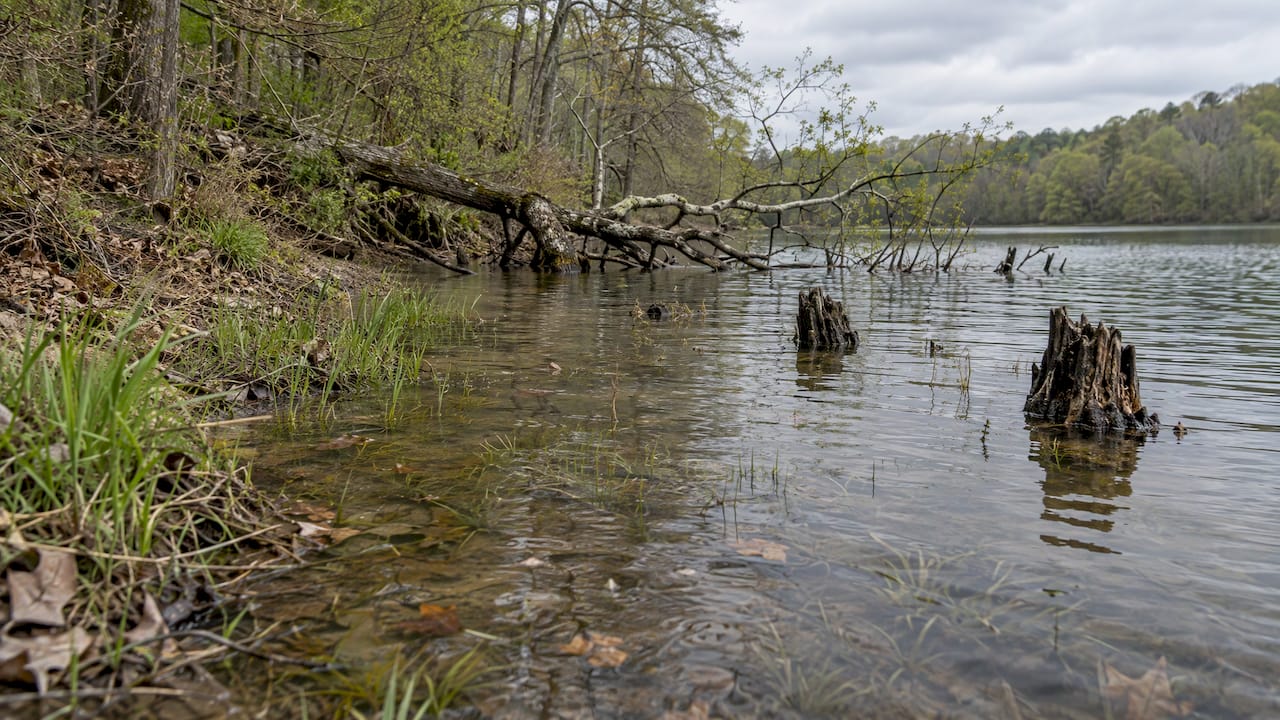
Once fish move up, largemouth tend to use shallow pockets and flats, four feet or less, in protected areas near cover, such as docks, laydown trees, stumps or holes in grass beds. Start there during a spring full or new moon window.
We cover the shallow move in depth in why bass go shallow in spring, and the weeks before it in our early spring bass fishing guide. After the moon-driven spawn window closes, the fish change again. Our pieces on late spring bass and post-spawn tactics show how to follow them.
What the science says about season and lunar cycles
The best-known peer-reviewed look at this tracked fish through the year. In that Canadian study, researchers found that, at the annual level, lunar phase had no significant relationship with either the distance fish traveled each day or the depth they used. That is a real caution against over-trusting a moon calendar.
The season-by-season view is more interesting:
| Season | What the tracking study found |
|---|---|
| Spring and summer | Marked effects of the lunar cycle on activity and depth, with deeper depths used in the second and third lunar quarters (waxing moon, 26 to 75% lit) |
| Autumn and winter | Lunar influence was not consistent from one lunar cycle to the next; fish were also about twice as deep and three times less active than in summer and spring |
Source for both rows: Hanson et al., Canadian lunar-cycle study.
The takeaway is practical. If you fish warm-water months, the moon may help you predict where bass sit. If you fish fall or winter, don’t expect the moon to be a dependable guide, and put your attention on temperature, forage and weather.
Fall is its own puzzle
In fall, many anglers pay attention to the moon alongside shad movement and cooling water. Because the research shows no repeatable lunar pattern in cooler months, we suggest using fall moon phases for scheduling only. Follow baitfish first. Our fall bass fishing guide and fall pattern breakdown show how to read the water, and our seasonal bass fishing tips put the whole year in one place.
Moonrise, moonset and solunar windows
Beyond phases, many anglers use solunar tables, which mark daily periods tied to the moon’s position. The theory describes four periods a day: two major periods, when the moon is overhead or underfoot, and two minor periods, around moonrise and moonset. Major periods are usually described as lasting one to two hours, and minor periods run shorter.
Here is a sensible way to use them:
- Check the major and minor windows for your lake and date in a free solunar table or app.
- See whether one overlaps dawn or dusk. When it does, you have two reasons to be on the water.
- If a window falls at midday, in the heat, don’t force it. Light and temperature usually outrank the table.
- Write down what happened. A few months of notes tell you more about your lake than any calendar.
A minor window at sunrise on a calm morning is the kind of overlap that makes a plan feel easy. A major window at 1 p.m. in August is often not worth the sunburn.
How to put it all together
The most useful approach is to stack your odds. When several factors point the same way, the day tends to be good. Here is the order we suggest.
- Season and water temperature. This sets where bass live and what they want.
- Weather. Stable or rising barometric pressure is generally friendlier than a sharp swing. Tides matter on tidal water, and our tides and bass fishing guide shows how to read them.
- Light and time of day. Low light around dawn and dusk is a proven bass window on any moon.
- Moon phase and solunar periods. Use these as a tiebreaker between two otherwise equal days.
If you can only fish one day and the moon is poor, go. Skipping a trip over a weak lunar forecast costs you more than the moon ever will.
A quick example
Say you have two open Saturdays in April. The water is 62°F and rising on both. One falls near a full moon, the other near a quarter moon. Everything else is equal. Pick the full moon Saturday, fish shallow cover in protected pockets, and expect fish moving up. If the weather turns on the full moon day, take the quarter moon day instead. The moon broke the tie, and the weather made the call.
For tournament anglers
Tournament fishing adds pressure, because your dates are set months ahead and you can’t choose the moon. That is actually fine. Use the moon in prefishing instead. Note the phase during practice, then think about how it will have shifted by tournament day. A practice on a full moon and a tournament on a waning moon may not fish the same, especially in spring.
Also keep a log. Record date, moon phase, water temperature, weather, time and the pattern that worked. Over a season, you will see your own lake’s tendencies. That personal record beats any generic chart.
Our take on the moon
We talk with a lot of anglers, from weekend guys to touring pros, and the moon comes up constantly. Our view is simple: it is worth knowing, and it is never the whole story. The anglers who catch fish consistently pay attention to the moon, then spend most of their energy on water temperature, cover, forage and presentation.
That is why we focus on practical, detailed coverage built around real-world bass fishing success. We want you to leave an article knowing what to do on the water this weekend, with content from top professionals who fish these patterns for a living.
If you want to see how that plays out, watch how our BAM Trail pros adjust through the seasons. The moon is one note in their plan, never the song.
Mark
Get more from Bass Angler Magazine
If you like breaking down conditions to find more bites, Bass Angler Magazine is built for you. We bring year-round bass fishing content, including print and digital articles, tournament coverage, gear guides, instructional resources, podcasts and video, for recreational and competitive anglers.

Learn more about Bass Angler Magazine and what each issue brings. If you want to test your skills against other anglers, take a look at the BAM Pro-Am Series.
FAQ
Is bass fishing good during a full moon?
It can be. Texas Parks and Wildlife found a higher share of big bass caught near a full moon than near a new moon, but it also found that angler effort likely mattered more. Fish a full moon the way you would any good day, and expect the bite to vary with season and weather.
Is a new moon or full moon better for bass fishing?
In spring, both are worth watching because they can line up with spawning when water reaches roughly 60 to 70°F. Outside the spawn, neither is a dependable winner. Choose based on season, weather and light, and use the moon to break ties.
Does the moon matter more in some seasons?
Yes. A Canadian tracking study found clear lunar effects on bass activity and depth in spring and summer, but no consistent pattern in autumn and winter. That is why we lean on the moon more in warm months and on forage and temperature in cold ones.
Should I skip a trip if the solunar forecast is bad?
No. Solunar tables work best as a tiebreaker when you have a choice between days. A good weather window, stable conditions and low light at dawn or dusk matter more than a weak forecast.
Sources
- Texas Parks and Wildlife, Short Reports: March is Big Bass Month
- Hanson et al., Effects of lunar cycles on the activity patterns and depth use of largemouth bass
- Tips for Spawning Bass, Part I, Temple Fork Outfitters
- Moon Rise and Moon Set Windows, Bassai Field Guide