
That explosive surface blow when a bass crushes a topwater lure is one of the most thrilling moments in bass fishing. But why bass chase topwater lures so aggressively is rooted in real biology and behavior, not luck or hype. Understanding the sensory systems, predatory instincts, and environmental factors that drive bass to the surface gives you a genuine edge on the water. This guide breaks down everything from bass anatomy to retrieve timing so you can fish topwater with confidence and consistency, not just hope.
Table of Contents
- Key takeaways
- Why bass chase topwater lures: the biology behind it
- Topwater lure types and what they trigger
- Retrieve techniques that trigger the commitment
- Environmental conditions that affect topwater success
- Putting it all together: choosing lures and reading bass
- My take on mastering topwater bass fishing
- Take your topwater game further with Bassanglermag
- FAQ
Key takeaways
| Point | Details |
|---|---|
| Bass biology drives strikes | Upward-angled eyes and a lateral line system make bass naturally tuned to surface disturbances. |
| Territorial aggression matters | Bass strike topwater lures to defend territory, not just because they are hungry. |
| Timing the hookset wins | Most strikes happen during a pause; waiting for weight before setting the hook improves hook-up rates dramatically. |
| Match lure to conditions | Frogs, poppers, walkers, and ploppers each work best in specific cover types and water conditions. |
| Temperature windows are critical | Topwater action peaks between 65°F and 85°F; below 60°F, surface strikes nearly stop. |
Why bass chase topwater lures: the biology behind it
The answer starts with anatomy. Bass have upward-angled eyes and a sensitive lateral line system that together make them exceptional surface predators. Their eyes are positioned to scan upward toward the water’s surface and sky, which means anything breaking the film directly above them registers instantly. When a lure slaps the water and creates ripples, a bass does not need to guess where the action is.
The lateral line does a lot of the heavy lifting too. This system detects low-frequency water vibrations created by a struggling baitfish, a splashing frog, or yes, a well-worked topwater lure. In muddy or stained water where vision is limited, the lateral line becomes the primary targeting tool. That is why topwater lures work even when visibility is poor.
“Bass strike topwater lures for two main reasons: hunger and territory. A surface lure that mimics struggling prey triggers feeding instinct. A surface lure that mimics an intruder triggers aggression. Both result in the same thing — an explosive strike.”
Territorial aggression is a frequently overlooked driver of topwater strikes. A bass does not need to be feeding to blow up on a surface lure. When something repeatedly disturbs their space, they respond hard. This is especially true around beds during the spawn and in established feeding zones throughout summer.
Environmental factors influence how effectively bass use these senses. Water clarity determines how much the eyes contribute versus the lateral line. Water temperature affects metabolism and willingness to chase. Surface chop can scatter vibrations, while calm water amplifies them. Knowing which senses are in play helps you choose the right lure and presentation.
Topwater lure types and what they trigger
Not all topwater lures work the same way, and that is by design. Different lure designs produce unique vibrations and surface disturbances that appeal to bass under different conditions and moods. Matching the right lure to the right scenario separates anglers who catch fish from those who wonder what went wrong.
| Lure Type | Key Action | Best Conditions | Strike Trigger |
|---|---|---|---|
| Popper | Splash and “bloop” sound | Open water, calm surface | Mimics feeding fish |
| Walking bait | Side-to-side zig-zag | Open flats, clear water | Mimics fleeing baitfish |
| Frog | Soft landing, weedless | Dense vegetation, pads | Mimics natural amphibian prey |
| Plopper | Rhythmic tail rotation | Open water, searching | Generates long-range vibration call |
Poppers create that distinctive splash-and-gurgle combination that sounds like a shad busting baitfish at the surface. Bass in the vicinity interpret that sound as an easy meal or competition for food. Walking baits like the Zara Spook produce a wide, side-to-side wake that mimics a baitfish trying to escape something below it. The motion creates visual and vibrational cues that trigger a chase response.
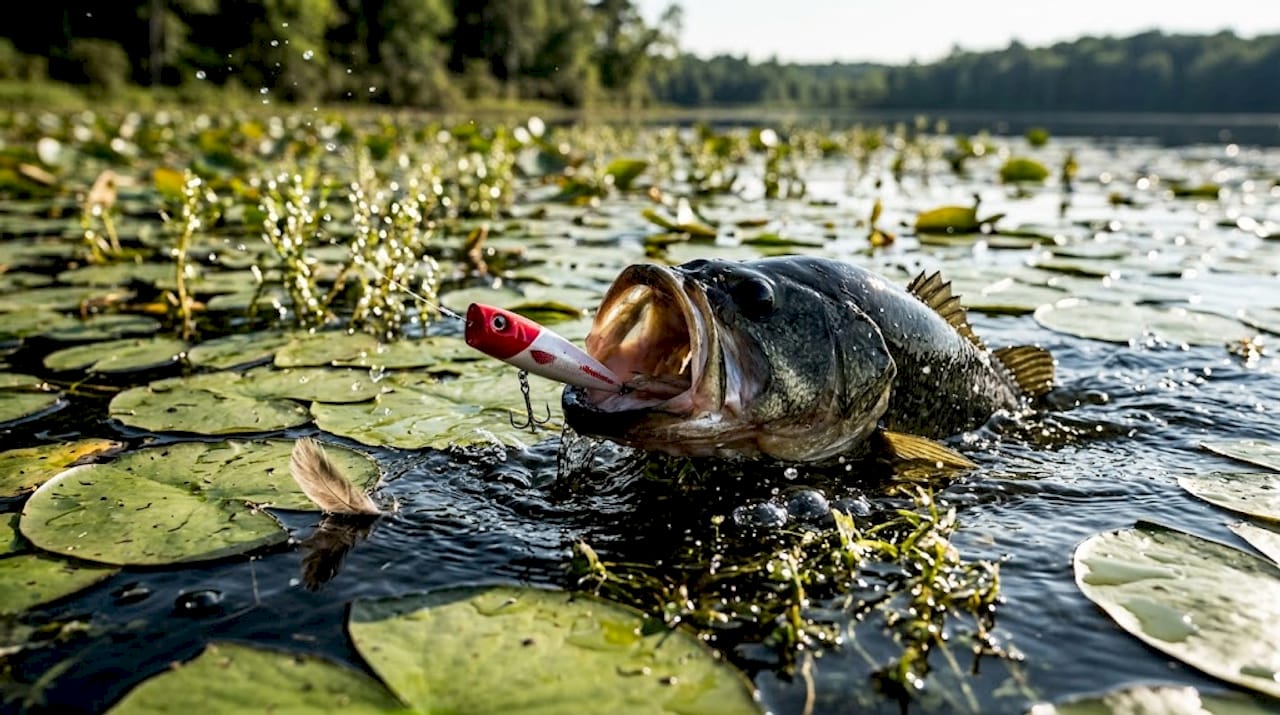
Frogs deserve special mention because of where you can throw them. Their weedless design lets you fish dense vegetation like lily pads and grass mats where bass hide and are primed to strike anything moving above them. A bass holding under a mat is already looking up. Drop a frog on top of that mat and work it to the edge, and you have a recipe for a violent blowup. For more on working that kind of structure, the Bassanglermag guide on fishing heavy cover covers proven approaches worth reading.
Ploppers have become go-to search baits because their rotating tail generates a consistent rhythmic thump that travels far underwater. Bass can track that signal from a significant distance and commit before they even see the lure clearly.
Retrieve techniques that trigger the commitment
This is where most anglers leave fish in the water. Knowing why bass chase topwater lures is useful, but knowing how to make them commit is where it translates to catches.
Start with slack line. The “slack to snap” retrieve technique means keeping the line slightly slack between twitches so the lure can pivot and dance freely rather than plow straight through the water. A taut line kills the action on most topwater lures.
Let the pause do the work. 70% of topwater strikes occur when the lure is completely still after a splash or twitch. Bass that followed the moving lure commit the moment it stops and sits there like an exhausted, defenseless target.
Hold for 3 to 5 seconds after every splash. This feels agonizingly long when you are watching a bass swirl under the lure. But the pause after a splash is critical and is one of the most overlooked moments in topwater fishing. That stillness mimics prey exhaustion and is exactly when bass commit.
Vary your twitch cadence. Erratic is better than robotic. Short, sharp twitches followed by long pauses outperform steady retrieves because they more accurately mimic an injured baitfish that moves in bursts and then stops.
Never set the hook on the splash alone. Setting the hook too early is the most common topwater mistake. Wait until you feel actual weight. Many anglers see the explosion and immediately rip the rod, pulling the lure right out of the bass’s mouth. Feel the fish, then set.
Pro Tip: When a bass misses your lure on a strike, resist the urge to rip it away. Let it sit completely still for 3 to 5 seconds. Bass that miss on the first swing will circle back and crush it on the second attempt if the lure is sitting motionless.
For more on treble hook timing and placement to convert surface strikes, the Bassanglermag article on treble hook tips is a smart read alongside this one.
Environmental conditions that affect topwater success
You can have the right lure and perfect technique, but if conditions are wrong, the fish will not cooperate. Understanding when to use topwater lures means reading the environment as much as the fish.
| Condition | Effect on Topwater Bite | Best Response |
|---|---|---|
| Water temp 65°F to 85°F | Peak surface activity window | Any topwater lure will work |
| Water temp below 60°F | Surface strikes nearly stop | Switch to subsurface presentations |
| Dawn and dusk | Increased surface aggression | Throw walkers and poppers |
| Overcast skies | Extended midday bite | Stay on topwater longer |
| Calm, slick surface | Amplified vibration detection | Use subtle lures like walkers |
| Light chop | Reduces visibility, favors sound | Use loud poppers and ploppers |
Optimal water temperature for topwater falls between 65°F and 85°F. That window covers late spring through early fall in most of the country, which is why topwater season feels so long in southern states but shorter in the north.
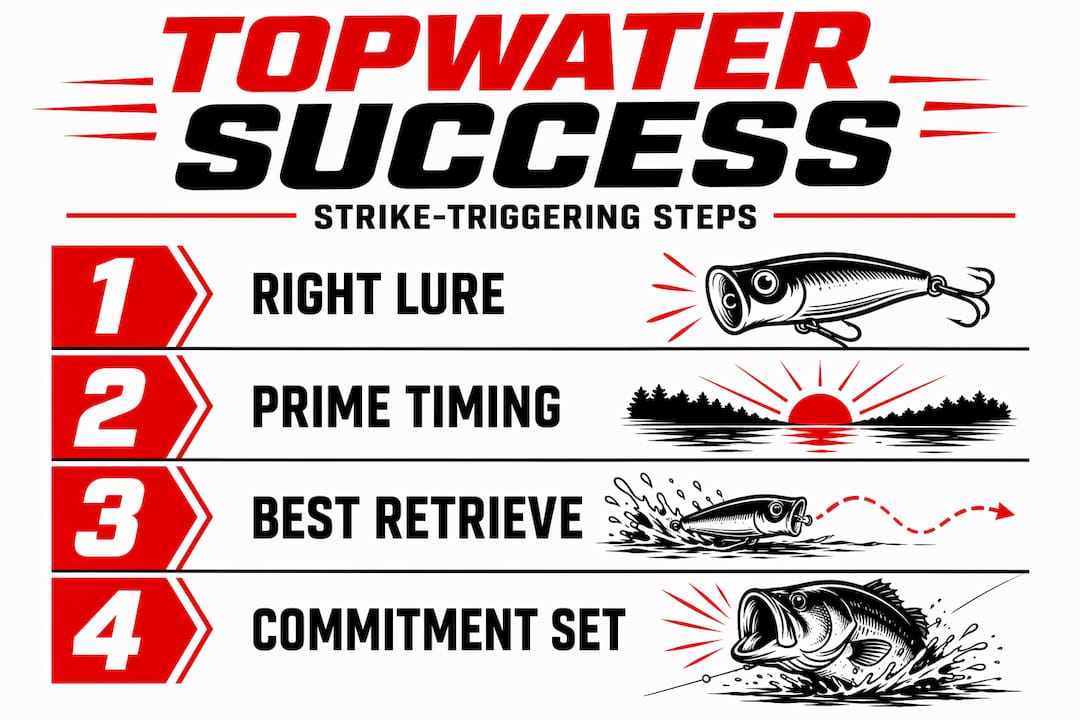
Low-light periods like dawn and dusk consistently produce the most aggressive topwater strikes. Bass move shallower and become more willing to chase when direct sunlight is off the water. Overcast days extend that window dramatically, sometimes into the middle of the day. On a gray, cloudy summer morning, the topwater bite can run for hours.
Pre-spawn and post-spawn periods are also topwater gold. Bass are shallow, aggressive, and territorial during these phases. Bassanglermag has a dedicated breakdown of post-spawn surface tactics worth bookmarking if you want to take advantage of that aggressive window. Fall produces another reliable topwater opportunity as bass feed heavily before the water cools, making it worth checking out what works for fall bass as well.
Putting it all together: choosing lures and reading bass
All the biology and technique knowledge in the world means little if you cannot translate it to decisions on the water. Here is how to build a practical approach.
- Match cover to lure. Frogs for heavy vegetation and matted grass, walkers for open flats and points, poppers for tight strike zones around docks and laydowns, ploppers for covering water quickly when searching for active fish.
- Read bass aggression levels. On days when bass are crushing anything that moves, speed up your retrieve slightly and keep pauses shorter. On slow days, slow everything down and make those pauses painfully long.
- Use visual and vibrational cues together. On calm, clear water, a walking bait’s visual zig-zag action is a primary trigger. On choppy or stained water, switch to a popper or plopper where sound and vibration carry more weight.
- Experiment with small changes. Moving from a 3-second pause to a 5-second pause, or switching from a fast cadence to an erratic one, can completely change the results in a single session.
- Trust local knowledge. Bass behavior varies by lake, region, and season. Talking to local guides or other anglers about what is working right now shortens your learning curve on any new body of water.
Pro Tip: If bass are following your topwater lure and turning away without striking, the lure is probably moving too fast or the pauses are too short. Slow down everything. More often than not, that adjustment alone turns follows into hookups.
My take on mastering topwater bass fishing
I have watched a lot of anglers work topwater lures with impressive gear, perfect casts, and then lose fish repeatedly because they cannot wait out the pause. It is genuinely one of the hardest things to train yourself to do. Every instinct tells you to keep moving, to keep working the lure. But in my experience, patience on that pause is what separates consistent topwater anglers from occasional lucky ones.
I have also seen anglers get locked into a “topwater season” mindset, deciding the bite only happens in summer mornings. That thinking costs them fish. I have had violent topwater blowups on overcast October afternoons and in the middle of spring days during a cold front recovery. The window is wider than most people think.
What I find genuinely underrated is using territorial aggression intentionally. When I am fishing a lure near a visible bed or a prime ambush spot, I will work that lure right over the area multiple times, not just once. A bass that ignores the first pass may blow up on the third or fourth. That persistence, combined with precise pause timing, has produced some of my best topwater days.
The science gives you the framework. The art is in the feel, the timing, and the willingness to slow down when everything in you wants to speed up.
— Mark
Take your topwater game further with Bassanglermag
Bassanglermag covers topwater tactics year-round because this style of fishing never really gets old, and there is always more to learn. Whether you want to dial in your post-spawn topwater approach or explore kayak bass fishing techniques that work at close range with surface lures, the site is packed with expert content from anglers who fish these methods seriously.

From gear reviews and seasonal strategies to tournament coverage and pro interviews, Bassanglermag is the resource bass anglers come back to all year long. If you are committed to getting better on the water, there is a lot more waiting for you at bassanglermag.com.
FAQ
Why do bass strike topwater lures if they are not feeding?
Bass strike out of territorial aggression as well as hunger, meaning a surface lure that invades their space will trigger an explosive response even when food is not the priority.
When is the best time to use topwater lures for bass?
The best times are dawn, dusk, and overcast days when bass are most active near the surface, and water temperatures are between 65°F and 85°F for peak chasing behavior.
Why do bass miss topwater lures so often?
Bass frequently miss topwater lures because anglers set the hook at the splash rather than waiting for the fish’s weight. Letting the fish fully commit before setting the hook dramatically increases the conversion rate.
What are the best topwater lures for bass in summer?
Ploppers and walking baits work well for covering open water on summer mornings, while frogs excel in heavy vegetation and lily pads where bass hold in the shade during warmer parts of the day.
How does retrieve speed affect topwater bass strikes?
Slower retrieves with long pauses consistently outperform fast, steady retrieves because most strikes happen on a motionless lure after it stops moving, mimicking an exhausted and vulnerable prey.